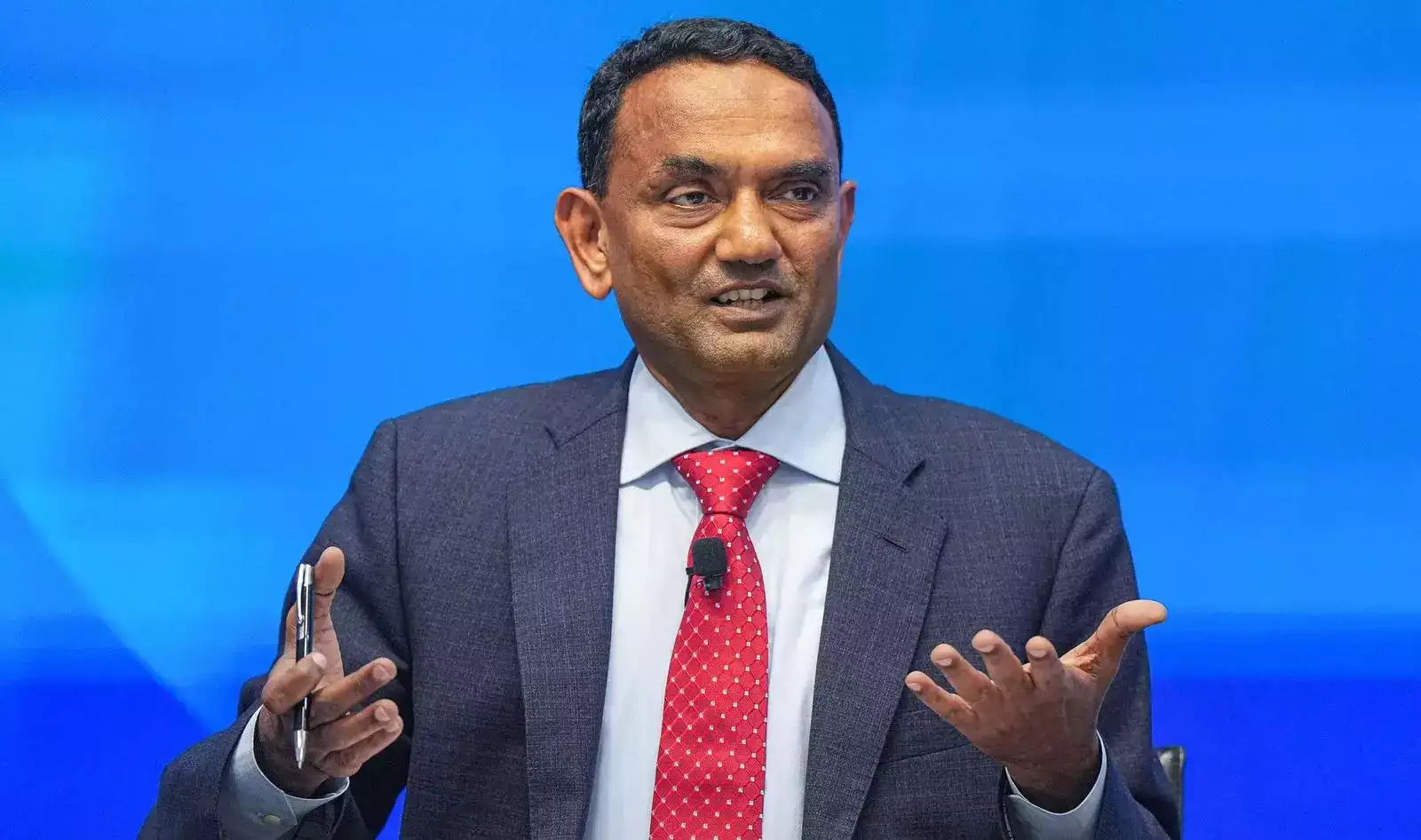
Tata Consultancy Services (TCS) is aggressively expanding into AI infrastructure, with a recent deal to build data centers for OpenAI in India and advanced discussions with other major tech firms. The company's CEO is very bullish on India's AI demand, estimating a need for 10 gigawatts of data center capacity by 2030, and sees this investment as a way to transform TCS's business model and offer end-to-end AI services.
The move comes as TCS faces pressure from shifting client IT budgets toward AI and competition, which has impacted its stock price. However, the CEO believes AI presents a major advisory opportunity, akin to past tech shifts, and that complex corporate systems will not be wholly replaced by large language models.
TCS's data center strategy involves significant partnership investments, with the company and partner TPG each contributing $1 billion toward a total infrastructure cost of $7-8 billion, the rest financed by debt. The goal is to secure attractive returns and differentiate TCS by providing scarce AI infrastructure and expertise to corporate clients.
Main Topics: TCS's AI infrastructure expansion and partnerships; Business model transformation and market pressures; Investment strategy and financial outlook for AI data centers.
Tata Consultancy Services, which just cut an agreement with OpenAI to build data centers for artificial intelligence in India, is nearing additional deals with other tech giants, signaling a commitment to reshaping its business model to capitalize on the emerging technology.
âWe are having discussions with multiple other hyperscalers,â said chief executive officer K Krithivasan during an interview at the companyâs offices in London. âWe are in advanced discussion with multiple players.â
His company is racing to build out the countryâs AI infrastructure because of what he sees as an enormous opportunity to deploy the technology in the worldâs most populous nation. India is likely to need about 10 gigawatts of AI data center capacity by 2030, he said, while only about 5 or 6 gigawatts have been announced so far. TCS wants to help close that gap.
âWe are very, very bullish,â said the 61-year-old. âThere is going to be lot of latent demand or unmet demand by 2030 so there is going to be a lot of investment required.â
TCS, which pioneered the strategy of providing tech expertise to Western banks, airlines and other corporations, has been under pressure in recent years from rising competition, US visa policies and the prospect of AI disruption. Once a stock market darling in India, the companyâs shares have declined about 20% this year and roughly 23% since Krithivasan took over in June of 2023.
âTCS needs to set a narrative on what it is that they are doing in AI,â said Arun Kejriwal, founder of Kejriwal Research and Investment Services Pvt. âPeople still donât know what to expect of an IT services company as far as AI is concerned.â
Corporate clients are shifting their IT spending away from the services traditionally offered by TCS and its peers, said Anurag Rana, analyst for Bloomberg Intelligence.
âClients are cutting budgets because theyâre investing in AI,â Rana said. âIf the clients are not spending, he, anybody else, cannot do anything.â
Krithivasan is not planning a radical break from the past. Rather, he sees AI as yet another opportunity for TCS to advise corporate clients on how to adopt new technology, much like it has done in the past for cloud computing or mobile services.
He doesnât believe large language models like those from Anthropic PBC or Alphabet Inc. will simply wipe away the need for corporations to operate large tech systems and hire teams of consultants to keep them humming. Banks, retailers and telecom players have complex systems dating back decades that need to support employees, store data, track inventories and deliver for customers.
âWill the whole value chain be replaced by an LLM? Itâs a far-fetched thing. Thatâs not going to happen,â he said. âItâs not that you can just go drop Anthropic in there.â
TCSâs data center investments are a shift in its business model. The Mumbai-based company announced at Indiaâs AI Impact Summit in February that it will partner with OpenAI to build facilities of at least 100 megawatts and as much as 1 gigawatt. Typically, a 1 gigawatt data center would cost $35 billion to $50 billion, but TCS wonât bear that cost.
Krithivasan said TCS will help pay for the structure itself, including racks, connectivity, power and cooling. That should cost roughly $7 billion to $8 billion. TCS will put in $1 billion, while partner TPG Inc. will contribute the same amount; the remainder will be financed with debt.
âWe are looking at a fairly attractive IRR,â he said.
The real payoff, he thinks, is that TCS can distinguish itself with AI infrastructure, valuable and perhaps scarce access to leading models and Nvidia chips.
âTo our customers, we will be able to offer end-to-end services,â he said. âWe can offer infrastructure, we can offer model training, we can offer agents, we can offer application intelligence. The entire stack, we can offer to our customers.â
TCSâs innovation hub in London, a sprawling space with stunning views of the city, offers a hint of whatâs to come. Current and prospective clients stop by to brainstorm new ideas for how to take advantage of new technologies â especially AI. The visitors usually begin with Lovable, a popular âvibe codingâ tool for beginners, to prototype apps quickly to test out new ideas on-site, said the companyâs head of innovation for UK and Ireland, Ved Sen.
TCS wants to encourage clients to think through the dizzying possibilities for AI in their businesses. That could be productivity improvements â like finishing software coding projects in a week instead of months. Or it could mean reengineering wide swathes of their enterprises because of the new capabilities.
One health-related idea, created for TCSâs sponsorship of the London Marathon, shimmers in a case in one corner of the hub. Using data pulled from real athletes, TCS created a digital twin of a heart that can simulate the organâs response to different training regimes, physiological evidence that can help a runnerâs preparation decisions.
Responding nimbly to client demands for AI will have knock-on effects on hiring. TCS has about 600,000 workers and is a large employer of college graduates. The company hired around 85,000 new staff in 2025 and intends to maintain its current pace. Some 20,000 offers have been doled out so far for 2026.
âWe may need people with different kinds of skillsets,â said Krithivasan. âWe maybe end up hiring people with more creative skills, people with more business background.â
Krithivasan pushed back on the idea that rising protectionism under US President Donald Trump would hurt his business. While the US is hiking H-1B visa application fees to $100,000 to make it more expensive to bring foreign workers into the country, TCS has scaled way back on such hiring. Fewer than 1,000 people will be hired through such visas this year, he said. Of the approximately 40,000 TCS staff in the US, fewer than 15,000 are dependent on the talent visa, Krithivasan said.
âWe hire much more in the US than we send people from India,â Krithivasan said. âOur dependence on the H-1B is very limited.â
Half of TCSâ revenue in 2025 came from the US, while the UK is its second-largest market.
UK lawmakers questioned the company last September after three TCS customers were hit by crippling cyberattacks.
A ransomware attack last April on retailer Marks & Spencer disabled online orders for months and disrupted payment systems. The retailer said attackers gained entry to its systems by tricking staff at an unnamed third-party contractor into handing over information. Fellow retailer Co-op was impacted by a similar cyberattack the same month.
Automaker Jaguar Land Rover, a Tata Group sister company, shuttered manufacturing sites around the world after a ransomware attack during the summer, costing the UK economy an estimated £1.9 billion, according to an analysis by non-profit Cyber Monitoring Centre.
In all three cases, TCS conducted internal probes and concluded âthere was no compromiseâ within its networks, said Krithivasan in a statement.
Almost three years into his tenure as CEO, Krithivasan says the lessons heâs learned in the role are pretty much the same ones he uncovered working his way through the company over a 30-year career.
âStaying close to your customers and staying close to your employees are the two things that cannot be overemphasized,â he says, as the sun begins to drop toward the horizon behind him and the River Thames stretches into the distance.
âWe are having discussions with multiple other hyperscalers,â said chief executive officer K Krithivasan during an interview at the companyâs offices in London. âWe are in advanced discussion with multiple players.â
His company is racing to build out the countryâs AI infrastructure because of what he sees as an enormous opportunity to deploy the technology in the worldâs most populous nation. India is likely to need about 10 gigawatts of AI data center capacity by 2030, he said, while only about 5 or 6 gigawatts have been announced so far. TCS wants to help close that gap.
âWe are very, very bullish,â said the 61-year-old. âThere is going to be lot of latent demand or unmet demand by 2030 so there is going to be a lot of investment required.â
TCS, which pioneered the strategy of providing tech expertise to Western banks, airlines and other corporations, has been under pressure in recent years from rising competition, US visa policies and the prospect of AI disruption. Once a stock market darling in India, the companyâs shares have declined about 20% this year and roughly 23% since Krithivasan took over in June of 2023.
âTCS needs to set a narrative on what it is that they are doing in AI,â said Arun Kejriwal, founder of Kejriwal Research and Investment Services Pvt. âPeople still donât know what to expect of an IT services company as far as AI is concerned.â
Corporate clients are shifting their IT spending away from the services traditionally offered by TCS and its peers, said Anurag Rana, analyst for Bloomberg Intelligence.
âClients are cutting budgets because theyâre investing in AI,â Rana said. âIf the clients are not spending, he, anybody else, cannot do anything.â
Krithivasan is not planning a radical break from the past. Rather, he sees AI as yet another opportunity for TCS to advise corporate clients on how to adopt new technology, much like it has done in the past for cloud computing or mobile services.
He doesnât believe large language models like those from Anthropic PBC or Alphabet Inc. will simply wipe away the need for corporations to operate large tech systems and hire teams of consultants to keep them humming. Banks, retailers and telecom players have complex systems dating back decades that need to support employees, store data, track inventories and deliver for customers.
âWill the whole value chain be replaced by an LLM? Itâs a far-fetched thing. Thatâs not going to happen,â he said. âItâs not that you can just go drop Anthropic in there.â
TCSâs data center investments are a shift in its business model. The Mumbai-based company announced at Indiaâs AI Impact Summit in February that it will partner with OpenAI to build facilities of at least 100 megawatts and as much as 1 gigawatt. Typically, a 1 gigawatt data center would cost $35 billion to $50 billion, but TCS wonât bear that cost.
Krithivasan said TCS will help pay for the structure itself, including racks, connectivity, power and cooling. That should cost roughly $7 billion to $8 billion. TCS will put in $1 billion, while partner TPG Inc. will contribute the same amount; the remainder will be financed with debt.
âWe are looking at a fairly attractive IRR,â he said.
The real payoff, he thinks, is that TCS can distinguish itself with AI infrastructure, valuable and perhaps scarce access to leading models and Nvidia chips.
âTo our customers, we will be able to offer end-to-end services,â he said. âWe can offer infrastructure, we can offer model training, we can offer agents, we can offer application intelligence. The entire stack, we can offer to our customers.â
TCSâs innovation hub in London, a sprawling space with stunning views of the city, offers a hint of whatâs to come. Current and prospective clients stop by to brainstorm new ideas for how to take advantage of new technologies â especially AI. The visitors usually begin with Lovable, a popular âvibe codingâ tool for beginners, to prototype apps quickly to test out new ideas on-site, said the companyâs head of innovation for UK and Ireland, Ved Sen.
TCS wants to encourage clients to think through the dizzying possibilities for AI in their businesses. That could be productivity improvements â like finishing software coding projects in a week instead of months. Or it could mean reengineering wide swathes of their enterprises because of the new capabilities.
One health-related idea, created for TCSâs sponsorship of the London Marathon, shimmers in a case in one corner of the hub. Using data pulled from real athletes, TCS created a digital twin of a heart that can simulate the organâs response to different training regimes, physiological evidence that can help a runnerâs preparation decisions.
Responding nimbly to client demands for AI will have knock-on effects on hiring. TCS has about 600,000 workers and is a large employer of college graduates. The company hired around 85,000 new staff in 2025 and intends to maintain its current pace. Some 20,000 offers have been doled out so far for 2026.
âWe may need people with different kinds of skillsets,â said Krithivasan. âWe maybe end up hiring people with more creative skills, people with more business background.â
Krithivasan pushed back on the idea that rising protectionism under US President Donald Trump would hurt his business. While the US is hiking H-1B visa application fees to $100,000 to make it more expensive to bring foreign workers into the country, TCS has scaled way back on such hiring. Fewer than 1,000 people will be hired through such visas this year, he said. Of the approximately 40,000 TCS staff in the US, fewer than 15,000 are dependent on the talent visa, Krithivasan said.
âWe hire much more in the US than we send people from India,â Krithivasan said. âOur dependence on the H-1B is very limited.â
Half of TCSâ revenue in 2025 came from the US, while the UK is its second-largest market.
UK lawmakers questioned the company last September after three TCS customers were hit by crippling cyberattacks.
A ransomware attack last April on retailer Marks & Spencer disabled online orders for months and disrupted payment systems. The retailer said attackers gained entry to its systems by tricking staff at an unnamed third-party contractor into handing over information. Fellow retailer Co-op was impacted by a similar cyberattack the same month.
Automaker Jaguar Land Rover, a Tata Group sister company, shuttered manufacturing sites around the world after a ransomware attack during the summer, costing the UK economy an estimated £1.9 billion, according to an analysis by non-profit Cyber Monitoring Centre.
In all three cases, TCS conducted internal probes and concluded âthere was no compromiseâ within its networks, said Krithivasan in a statement.
Almost three years into his tenure as CEO, Krithivasan says the lessons heâs learned in the role are pretty much the same ones he uncovered working his way through the company over a 30-year career.
âStaying close to your customers and staying close to your employees are the two things that cannot be overemphasized,â he says, as the sun begins to drop toward the horizon behind him and the River Thames stretches into the distance.
 Meridiano