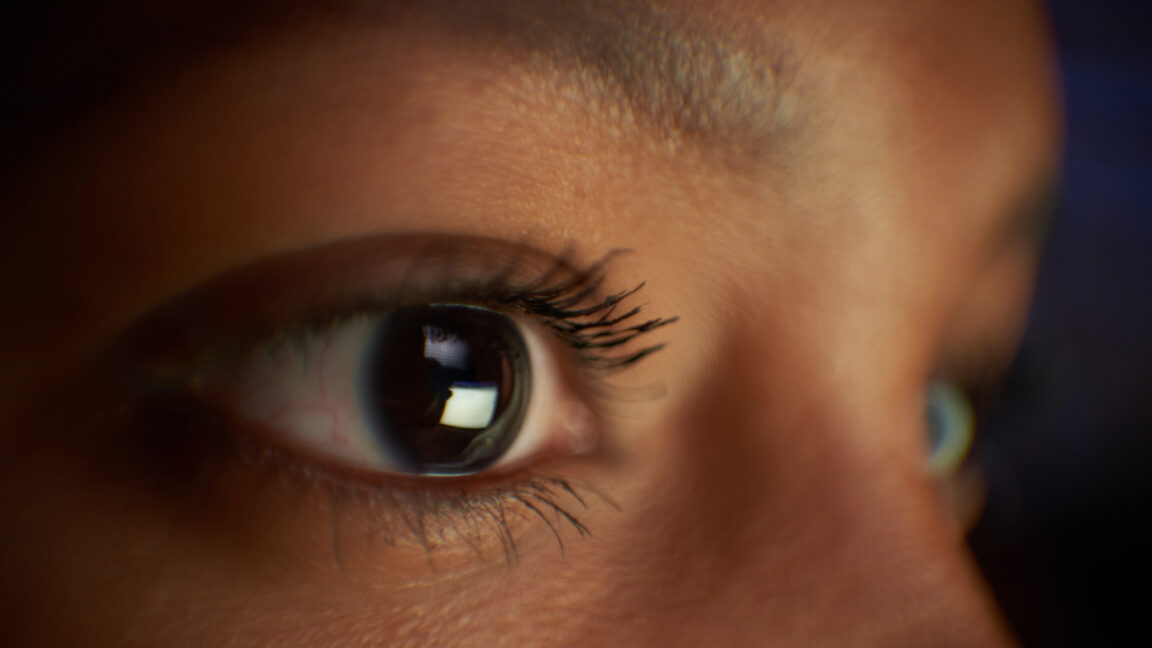
A new evolutionary theory proposes that vertebrate eyes, including human eyes, may not have evolved directly from the paired eyes of early animals. Instead, they might have been reinvented from a single, central light-sensing organ after the original paired eyes were lost.
The key evidence is a fundamental difference in photoreceptor cells: vertebrates use ciliary cells (rods and cones) for vision, while most other animals use rhabdomeric cells. This suggests a distinct evolutionary pathway where vertebrates uniquely co-opted both cell types into a single, new visual organ.
The main topics covered are evolutionary biology, the origin of vertebrate eyes, and the comparative anatomy of photoreceptor cells.
After losing its original eyes, one of our distant ancestors may have done what evolution does best: tinkered with what was available, reshaping a single central visual organ into two new eyes.
That’s the idea behind a new theoretical synthesis published in Current Biology. According to the data considered by its authors—a team from the University of Sussex (UK) and Lund University (Sweden)—vertebrate eyes, ours included, may not descend directly from the paired eyes of early bilaterian animals. Instead, they may have been “reinvented” from what was once a single light-sensitive organ that survived an evolutionary detour.
Strange eyes
“Vertebrate eyes are so fundamentally different from the lateral eyes of other animal groups,” explains Dan-Eric Nilsson, senior author of the study from Lund University and a leading expert in eye evolution. “The key difference is the identity of the main photoreceptor, which is of ciliary nature in the vertebrate eye but rhabdomeric in other animal groups, such as arthropods and cephalopods,” he adds.
To understand what Nilsson is getting at, we need to unpack a few key concepts.
There are two major classes of light-sensitive photoreceptor cells—rhabdomeric and ciliary—that differ in shape, in the visual pigments (opsins) they contain, and in their electrical responses to light.
Most invertebrates rely on rhabdomeric photoreceptor cells for vision, while ciliary cells mediate light sensing but not vision—they generally help regulate internal biological clocks. Vertebrates, however, brought both types of photoreceptors into the same organ.
In the vertebrate retina, ciliary photoreceptor cells—rods and cones—carry out image-forming vision, while the rhabdomeric component both monitors ambient light levels and relays visual information from rods and cones to higher brain centers.
 Meridiano