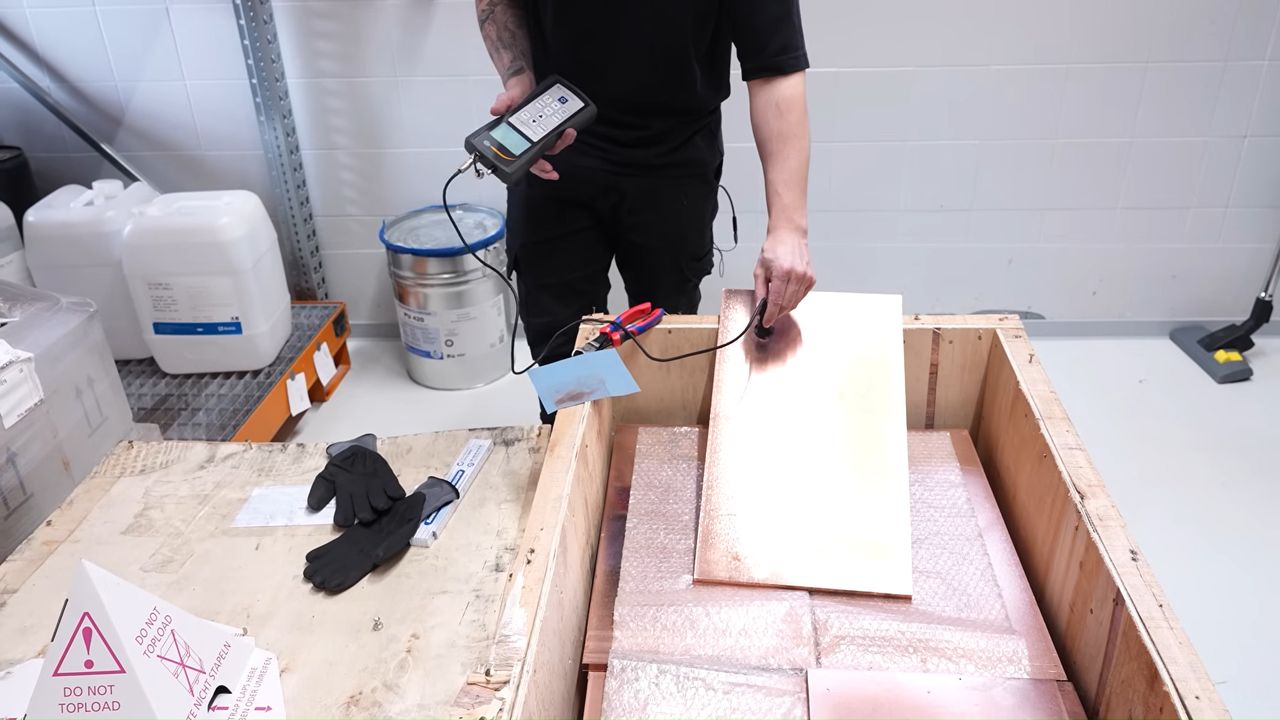
Thermal Grizzly, a computer accessories firm, was scammed out of approximately $46,000 by two separate suppliers on Alibaba. Despite precautions like partial upfront payments and verifying supplier histories, both shipments contained fake materials: copper-plated steel plates and aluminum crates filled mostly with cheap steel ballast.
The company's loss is not only financial but also includes significant time, energy, and product delays. While some material may be sold for scrap, the suppliers are largely unresponsive, and the incident has damaged the company's operations and reputation.
The main topics covered are: a business fraud case involving counterfeit metals, the failure of due diligence processes on a global e-commerce platform, and the operational and financial consequences for the victim company.
Thermal Grizzly scammed out of $46,000 by Alibaba metals suppliers — company spread the risk across two copper and aluminum suppliers, only for both to send cheaper, fake materials
All that glisters is not copper.
Get Tom's Hardware's best news and in-depth reviews, straight to your inbox.
You are now subscribed
Your newsletter sign-up was successful
Thermal Grizzly (TG) has been stung by fake materials sellers based in China, with nearly $50,000 down the drain. Expert overclocker Roman ‘Der8auer’ Hartung’s computer accessories firm had been struggling to source copper and aluminum plates in Europe, so it decided to source alternative suppliers in the Far East. Despite some sage-sounding precautions and some diligence, TG received two separate shipments composed largely of fake material.
If you’ve been wondering about TG product stock, shipments, and delays, then the video above might help you understand what’s been happening behind the scenes.
Der8auer says the video was not easy to make, as it is “quite embarrassing for me personally.” However, it is good to share the story if it can help just one other person or firm avoid a similar fate. In TG’s case, the bad trade has been a big loss in cash (€40,000 or ~ $46,250), time, and energy. Moreover, it still needs to source these materials and find funds to cover the extra costs.
Article continues belowSo, despite finding a pair of suppliers on Alibaba that seemed to have a solid verified track record spanning several years and corresponded professionally, they were both duds. Cautious procedures like paying just 30% up front, followed by the rest of the funds after receiving shipment confirmation, were simply not cautious enough. On receiving the shipping crates, it was one disappointment after another.
In the video, we see the ‘copper’ crate analysis first. What Der8auer received were ferric metal slabs (iron or steel) with quite a thick copper coating. So, they passed a visual test, and a corner snipped using some pliers looked good under an electron microcopy sample test.
However, the first red flag was shown when the TG boss went to test the copper slabs with a thermal surface conductivity meter. On a piece of reference copper material, the meter beeped, and the reading was 89%. However, the freshly unboxed ‘China copper’ didn’t even prompt this scientific instrument to produce a reading…
A milling machine was used to take a few millimeters off the surface of the newly imported material, and it soon revealed white metal, with sparks being produced. A small magnet confirms the actual shipped consignment consisted of “copper-coated steel plates.”
Get Tom's Hardware's best news and in-depth reviews, straight to your inbox.
The second swindler
The second supplier’s aluminum swindle was a little different. This unscrupulous supplier had layered a few genuine aluminum slabs on top of the crate contents. Then, cheap steel plates were inserted below, and a few sheet steel voids were constructed to make the consignment roughly the expected weight for the amount of aluminum purchased.
From the video, it looks like about a quarter of the aluminum shipment was usable. After around five layers, the crates were filled with the aforementioned far-cheaper steel sheets as ballast.
There was also a copper shipment from this second supplier. Again, a few genuine sheets were on top. Like with the first supplier, though, it was soon found that most of the materials looked copper colored, but were magnetic. Another load of copper-plated steel…
A few thousand Euros for scrap
Der8auer was clearly exasperated to be swindled “twice, on this scale.” There is a possibility of getting a few thousand Euros back from the steel from a scrap dealer. Nevertheless, the loss isn’t just financial; it is to the company's reputation, delays, energy, and so on.
To conclude, the TG boss reveals that one of the suppliers no longer responds to communications. Another is still in touch, but Der8auer admits he “honestly doesn’t have much hope.” In the end, it sounds like he won’t expend any further energy pursuing justice, as “a German company doing something in China like this, it's almost impossible that you will succeed and it will cost you a lot more time and money.”
Follow Tom's Hardware on Google News, or add us as a preferred source, to get our latest news, analysis, & reviews in your feeds.
Mark Tyson is a news editor at Tom's Hardware. He enjoys covering the full breadth of PC tech; from business and semiconductor design to products approaching the edge of reason.
 Meridiano