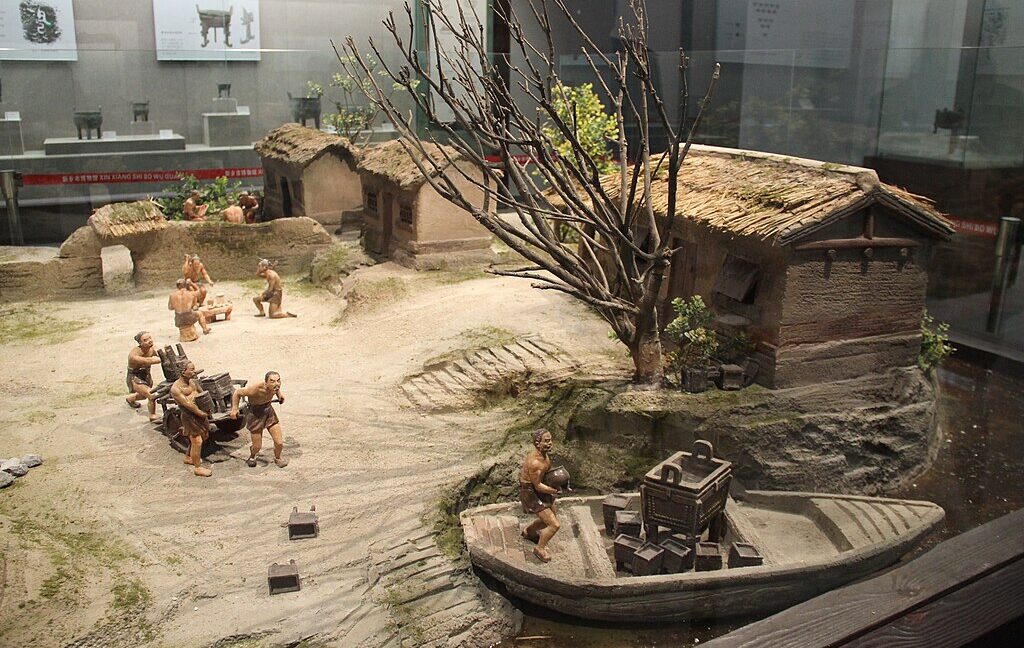
A new study links warmer Pacific Ocean waters to devastating floods in ancient China's Shang Dynasty around 3,000 years ago. The research connects this oceanic warming to more intense typhoons, which caused flooding hundreds of kilometers inland, disrupting major civilizations like the Shang and the Sanxingdui culture. Archaeological evidence shows these floods led to population decline, settlement relocation, and cultural upheaval.
The authors suggest this ancient event, reconstructed using geological data, historical flood records from oracle bones, and archaeological findings, serves as a warning about how climate change can intensify extreme weather.
The main topics covered are ancient climate change, its impact on historical civilizations through increased typhoons and flooding, and the archaeological evidence of societal disruption.
Warmer waters in the Pacific Ocean may have brought devastating floods to the cradle of ancient Chinese civilization, according to a recent study in which its authors link three wildly different lines of evidence to tell the story.
People in Shang Dynasty China, around 3,000 years ago, probably didn’t realize that the massive floods sweeping through their heartland were the product of typhoons battering the southern Chinese coast hundreds of kilometers away. They certainly couldn’t have seen that the sheer intensity of those typhoons was fueled by a sudden shift in temperature cycles over the Pacific Ocean thousands of kilometers to the south and east. But, with the benefit of 3,000 years of hindsight and scientific progress, Nanjing University meteorologist Ke Ding and colleagues recently managed to connect the dots. The results are like a handwritten warning from the Shang Dynasty about how to prepare for modern climate change.
Typhoons, oracle bones, and abandoned settlements
Around 3,000 years ago, two great civilizations were flourishing in central China. In the Yellow River Valley, the Shang Dynasty rose to prominence, producing the first Chinese writing and also sacrificing thousands of people in ceremonies at the capital, Yinxu. Meanwhile, on the Chengdu Plain in southwestern China, the Shanxingdui culture built a walled capital city and sculpted large bronze heads, gold foil masks, and tools of jade and ivory, which they buried in huge sacrificial pits.
Archaeological sites across central China reveal that at various points between 4,000 and 2,500 years ago, disasters rocked these thriving societies, decimating the population, forcing settlements to relocate, and causing major cultural shifts and political upheaval.
Both civilizations rebounded after these disruptions; it didn’t take long, in the archaeological scheme of things, for populations to swell and settlements to rebuild. But for a little while, life was clearly disrupted.
 Meridiano