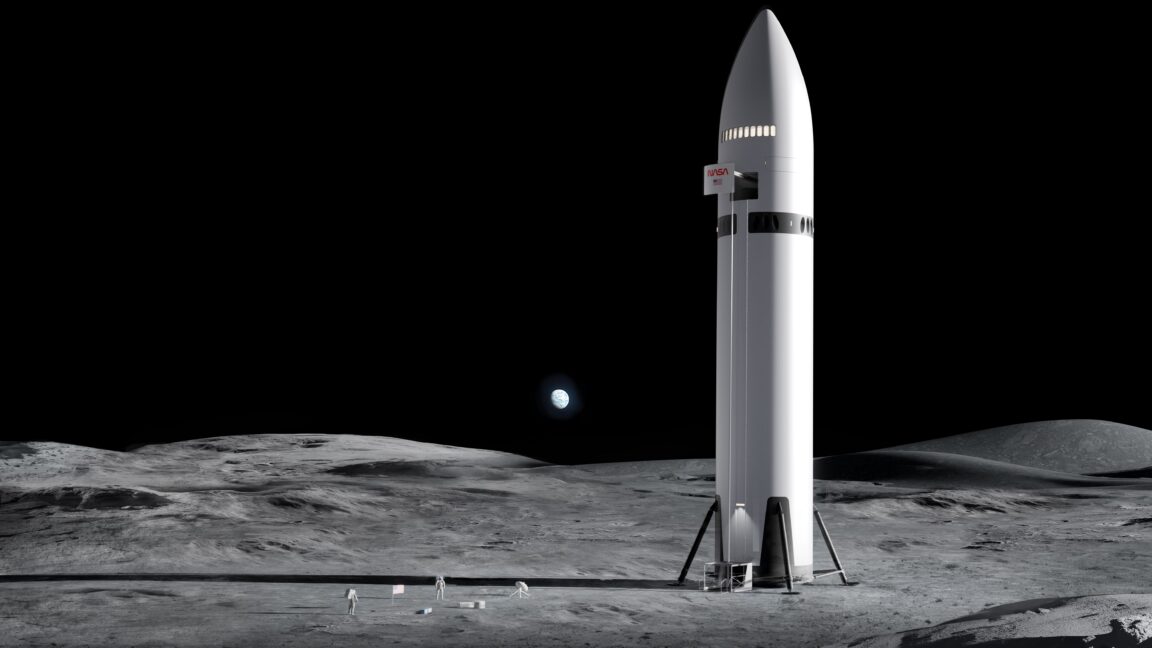
A new NASA inspector general report examines the agency's management of Human Landing System contracts with SpaceX and Blue Origin. It finds the fixed-price contracting approach effective at controlling costs and providing NASA insight into the companies' lander development.
The report reveals a specific disagreement between NASA and SpaceX regarding manual control requirements for the Starship lunar lander. NASA is concerned that SpaceX's current approach does not fully meet the requirement for astronaut manual control during lunar descent, with associated risks trending negatively.
The main topics covered are NASA's lunar lander program, contracting strategies, and a technical safety disagreement over manual control.
NASA’s inspector general released a new report on Tuesday that examines the space agency’s management of the Human Landing System development contracts signed with SpaceX and Blue Origin.
These landers are essential for NASA’s program to land humans on the Moon this decade and then establish a long-term settlement on the lunar surface. However, both NASA and the companies developing the landers have largely been silent about their efforts. For this reason the new report on Human Landing Systems (HLS) provides some interesting insights previously unknown to the public.
Overall, the report, signed by Office of Inspector General senior official Robert Steinau, finds that the fixed-price contracting approach has been beneficial for NASA as it seeks to broaden its utilization of the US commercial space industry.
“We found that the Agency’s contract approach has been effective at controlling costs and provided the HLS Program with insight into SpaceX’s and Blue Origin’s development of their lunar landers,” the report states. “The providers have also been able to utilize the Agency’s subject matter expertise and unique capabilities and facilitates to advance their lander development.”
Manual control desired
That’s not to say there have not been difficulties.
One of these involves the extent to which astronauts flying on board SpaceX’s Starship should be able to take manual control of the vehicle during flights down to the lunar surface.
“There is disagreement between NASA and SpaceX on whether the provider’s current proposed approach for landing meets the intent of the Agency’s manual control requirement,” the report states. “Despite the provider’s stated acknowledgment and commitment to meeting this requirement, NASA’s tracking of SpaceX’s manual control risk indicates a worsening trend.”
 Meridiano