Snabbit, a Bangalore-based household-services app, is in talks for a Series D funding round at a valuation of approximately $450 million. This reflects strong investor interest in India's online home-services market, which is projected to grow significantly but is currently dominated by informal, offline arrangements.
The company operates in a rapidly expanding sector targeting India's middle class, though it currently operates at a loss as it builds supply for anticipated demand. Key challenges for the industry include potential gig-work regulations and the need to navigate India's congested urban landscapes to provide fast service.
The main topics covered are Snabbit's funding and valuation, the growth potential and current state of India's home-services market, the operational model and challenges of the platform, and the competitive landscape.
Household-help app Snabbit is in talks for fresh funding at a valuation of about $450 million, the latest to tap investor interest in the burgeoning market.
The Bangalore-based upstart, which lets consumers order instant help for tasks like cooking or cleaning, is working on its Series D round after already snagging $56 million in the 18 months since its start in 2024, founder Aayush Agarwal, 32, said in an interview. Its previous round valued it at $180 million.
Startups offering household help in as little as 10 minutes have bucked the trend in Indiaâs prolonged venture funding drought. Investors are drawn to the growth prospects of the platforms, which are targeting the worldâs most populous countryâs rapidly expanding middle class.
Even with several apps sprouting up â Snabbitâs rivals include Pronto and the publicly traded Urban Co. â Indiaâs enormous home-services economy remains overwhelmingly analogue. Cleaning, dishwashing, childcare and routine maintenance are largely organised through word of mouth and informal housing society networks rather than mobile applications.
Indiaâs market for such services will approach $100 billion by the end of the decade from about $60 billion currently, growing at 10% annual pace, Redseer Strategy Consultants estimates. Snabbit says the top 60 million urban households each spend roughly $750 a year on household services.
âWe expect it to go to $100 billion,â Agarwal said, citing rising disposable incomes, urbanisation, and the emergence of the apps. âWhen something that was otherwise not as accessible becomes readily accessible, the overall pie also increases in size. Weâve seen this with food delivery.â
Less than 1% of paid household help is currently ordered through online platforms, Redseer estimates, leaving them with ample room to gain market share.
In markets such as the US, similar services have won users, though theyâve never become major growth companies, with higher rates in more expensive economies limiting their popularity. TaskRabbit Inc. was acquired by furniture giant Ikea Group in 2017, while a competing service Uber was exploring hasnât emerged. In China, tech giants JD.com Inc. and Alibaba Group Holding Ltd. offer help with household work.
Agarwal got the idea for his startup after struggling for months to find home help. He eventually asked his mother to conduct the search and hire the old-fashioned way â lingering near apartment gates, speaking to domestic workers going for jobs elsewhere and negotiating informally during morning walks.
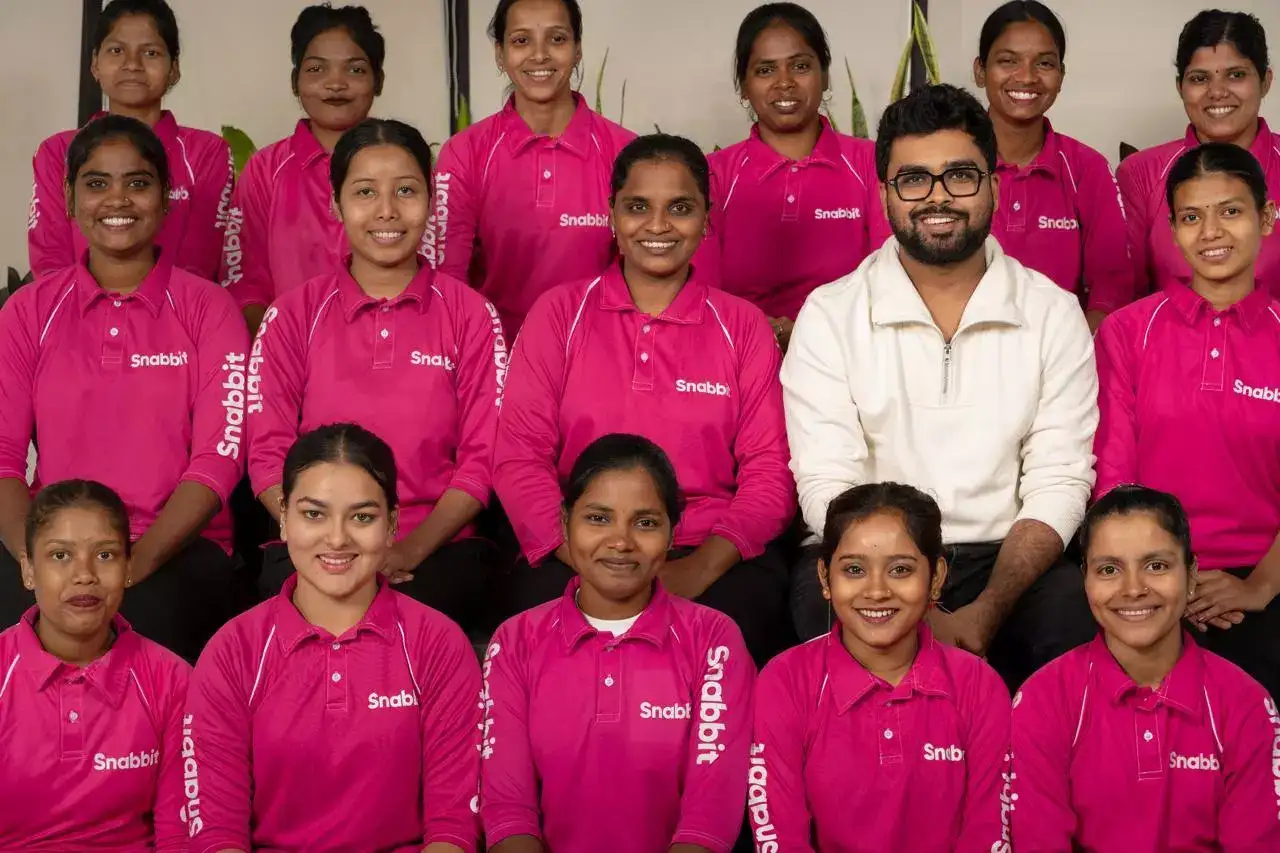
âIn a world where everything is a button-click away, this was an irrational amount of effort,â Agarwal said at his firmâs headquarters. The walls and furniture in his office are pink, the colour worn by thousands of Snabbitâs domestic workers.
To match orders with workers and ensure fast delivery, Snabbit has divided cities into micro markets defined by walkability, traffic patterns and physical barriers. Given Indiaâs often congested roads, the app even takes into account which side of the street the user is.
Among the sectorâs challenges is further regulation of gig work. That could lead to base pay requirements and costs for training, insurance and compliance â putting pressure on platformsâ profit margins. India has begun enforcing gig-worker welfare, such as social-security contributions from platforms.
Snabbit already guarantees minimum monthly wages, typically of $270 to $380, depending on shift structure and location. Even after years of strong economic growth, Indiaâs average monthly pay is a relatively low $350, approximately, according to job website Shine.
Snabbitâs margins remain negative, according to Agarwal, largely because itâs building supply ahead of expected rising demand. In some of its more mature markets, Snabbit would be profitable if it stopped expanding, he said.
The Bangalore-based upstart, which lets consumers order instant help for tasks like cooking or cleaning, is working on its Series D round after already snagging $56 million in the 18 months since its start in 2024, founder Aayush Agarwal, 32, said in an interview. Its previous round valued it at $180 million.
Startups offering household help in as little as 10 minutes have bucked the trend in Indiaâs prolonged venture funding drought. Investors are drawn to the growth prospects of the platforms, which are targeting the worldâs most populous countryâs rapidly expanding middle class.
Even with several apps sprouting up â Snabbitâs rivals include Pronto and the publicly traded Urban Co. â Indiaâs enormous home-services economy remains overwhelmingly analogue. Cleaning, dishwashing, childcare and routine maintenance are largely organised through word of mouth and informal housing society networks rather than mobile applications.
Indiaâs market for such services will approach $100 billion by the end of the decade from about $60 billion currently, growing at 10% annual pace, Redseer Strategy Consultants estimates. Snabbit says the top 60 million urban households each spend roughly $750 a year on household services.
âWe expect it to go to $100 billion,â Agarwal said, citing rising disposable incomes, urbanisation, and the emergence of the apps. âWhen something that was otherwise not as accessible becomes readily accessible, the overall pie also increases in size. Weâve seen this with food delivery.â
Less than 1% of paid household help is currently ordered through online platforms, Redseer estimates, leaving them with ample room to gain market share.
In markets such as the US, similar services have won users, though theyâve never become major growth companies, with higher rates in more expensive economies limiting their popularity. TaskRabbit Inc. was acquired by furniture giant Ikea Group in 2017, while a competing service Uber was exploring hasnât emerged. In China, tech giants JD.com Inc. and Alibaba Group Holding Ltd. offer help with household work.
Agarwal got the idea for his startup after struggling for months to find home help. He eventually asked his mother to conduct the search and hire the old-fashioned way â lingering near apartment gates, speaking to domestic workers going for jobs elsewhere and negotiating informally during morning walks.
âIn a world where everything is a button-click away, this was an irrational amount of effort,â Agarwal said at his firmâs headquarters. The walls and furniture in his office are pink, the colour worn by thousands of Snabbitâs domestic workers.
To match orders with workers and ensure fast delivery, Snabbit has divided cities into micro markets defined by walkability, traffic patterns and physical barriers. Given Indiaâs often congested roads, the app even takes into account which side of the street the user is.
Among the sectorâs challenges is further regulation of gig work. That could lead to base pay requirements and costs for training, insurance and compliance â putting pressure on platformsâ profit margins. India has begun enforcing gig-worker welfare, such as social-security contributions from platforms.
Snabbit already guarantees minimum monthly wages, typically of $270 to $380, depending on shift structure and location. Even after years of strong economic growth, Indiaâs average monthly pay is a relatively low $350, approximately, according to job website Shine.
Snabbitâs margins remain negative, according to Agarwal, largely because itâs building supply ahead of expected rising demand. In some of its more mature markets, Snabbit would be profitable if it stopped expanding, he said.
 Meridiano