The Karnataka government is reviewing its existing data centre policy to create a new, sustainable one, addressing concerns over the massive water and energy consumption of these facilities. The focus is shifting from Bengaluru to coastal areas like Mangaluru, which is better suited for sub-sea cable connections and avoids Bengaluru's water and port constraints.
The new policy will prioritize small, medium, and large data centres over hyperscale ones, which are deemed unsuitable for Bengaluru. The government is also exploring the use of treated water and engaging with private companies and the central government to develop this sustainable infrastructure.
Main Topics: Government policy on sustainable data centres, environmental impact of data centres (water/energy use), geographic shift in focus to coastal Karnataka, and the economic and technological considerations behind the policy review.
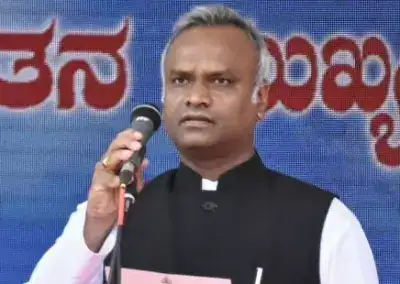
IT/BT Minister Priyank Kharge on Wednesday said the state government is considering a "sustainable data centre policy" amid concerns over significant environmental costs associated with their water and energy consumption.
Responding to a question by Doddaballapur BJP MLA Dheeraj Muniraj during the Question Hour in the assembly, he said, "We have 32 private data centres functioning in the state. He (MLA) wants data centres from the government side. We already have a data centre policy, which is under review." Calling the data centres as "necessary evil," he said they are needed for AI, machine learning and emerging technologies.
"But data centres are also heavy water and energy guzzlers. So, we at the government are mulling a sustainable data centre policy, because our earlier data centre policy is two or three years old, and with changing technology, we are planning for sustainable data centres." The Minister said the government's focus is shifting beyong Bengaluru, to coastal areas like Mangaluru.
"Since we can bring sub-sea cables there. We are discussing with private companies. I have written to the Union Telecom Ministry and sought a sub-sea landing at Mangaluru. They said they would provide assistance if private companies do it."
Pointing out that hyperscale data centres will not be suitable for Bengaluru due to absence of a port and water constraints, he said, "it would be better if it is on the sea side. So our focus is on edge, small, medium and large data centres, rather than hyperscale. Data centres requiring above 40 megawatt power will be hyperscale."
Explaining the economics of data centres, Kharge said, "One megawatt needs about Rs 70 crore. One acre can yield only one megawatt. We have to spend 25 million litres per megawatt per year for one data centre. Five questions on ChatGPT will consume 500 ml of water. That is how much the consumption is." However, new technologies have come that involve using treated water at data centres. "That's why we'll relook at our policy, and come up with a sustainable one."
Earlier, Muniraj urged the government to set up data centre parks in his Doddaballapur constituency, saying Bengaluru, the IT city was losing out on data centres as companies were moving to other cities.
According to him, Bengaluru is facing a shortage of colocation and large enterprise data centres, and there is no dedicated data centre park from the government, because of which large enterprises are leaving Bengaluru.
Noting that Bengaluru ranks behind Mumbai, Hyderabad, Chennai and Delhi in terms of data centres, the MLA said there is a growing need for large data centres.
For full-stack data centers, a 'Data Centre park' should be sanctioned for Doddaballapura, near which the KWIN (Knowledge, Wellbeing, and Innovation) City is coming up , he said, adding that "Amazon, Microsoft, Google, Meta, Alibaba, Tencent, Oracle, Apple, NTT -- all of them have offices in Bengaluru. Their data centres should be retained in Bengaluru."
Responding to a question by Doddaballapur BJP MLA Dheeraj Muniraj during the Question Hour in the assembly, he said, "We have 32 private data centres functioning in the state. He (MLA) wants data centres from the government side. We already have a data centre policy, which is under review." Calling the data centres as "necessary evil," he said they are needed for AI, machine learning and emerging technologies.
"But data centres are also heavy water and energy guzzlers. So, we at the government are mulling a sustainable data centre policy, because our earlier data centre policy is two or three years old, and with changing technology, we are planning for sustainable data centres." The Minister said the government's focus is shifting beyong Bengaluru, to coastal areas like Mangaluru.
"Since we can bring sub-sea cables there. We are discussing with private companies. I have written to the Union Telecom Ministry and sought a sub-sea landing at Mangaluru. They said they would provide assistance if private companies do it."
Pointing out that hyperscale data centres will not be suitable for Bengaluru due to absence of a port and water constraints, he said, "it would be better if it is on the sea side. So our focus is on edge, small, medium and large data centres, rather than hyperscale. Data centres requiring above 40 megawatt power will be hyperscale."
Explaining the economics of data centres, Kharge said, "One megawatt needs about Rs 70 crore. One acre can yield only one megawatt. We have to spend 25 million litres per megawatt per year for one data centre. Five questions on ChatGPT will consume 500 ml of water. That is how much the consumption is." However, new technologies have come that involve using treated water at data centres. "That's why we'll relook at our policy, and come up with a sustainable one."
Earlier, Muniraj urged the government to set up data centre parks in his Doddaballapur constituency, saying Bengaluru, the IT city was losing out on data centres as companies were moving to other cities.
According to him, Bengaluru is facing a shortage of colocation and large enterprise data centres, and there is no dedicated data centre park from the government, because of which large enterprises are leaving Bengaluru.
Noting that Bengaluru ranks behind Mumbai, Hyderabad, Chennai and Delhi in terms of data centres, the MLA said there is a growing need for large data centres.
For full-stack data centers, a 'Data Centre park' should be sanctioned for Doddaballapura, near which the KWIN (Knowledge, Wellbeing, and Innovation) City is coming up , he said, adding that "Amazon, Microsoft, Google, Meta, Alibaba, Tencent, Oracle, Apple, NTT -- all of them have offices in Bengaluru. Their data centres should be retained in Bengaluru."
 Meridiano