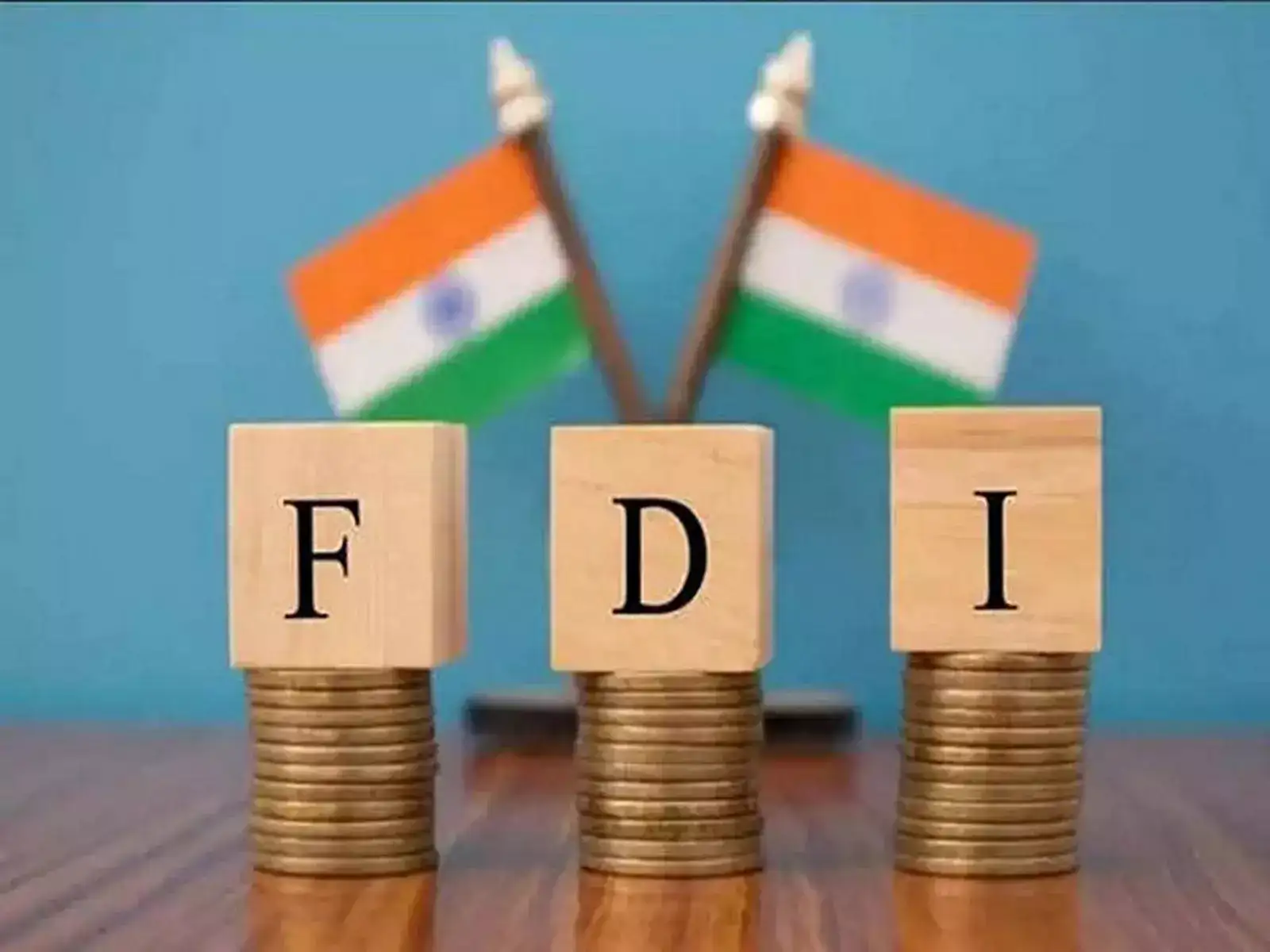
The Indian government has relaxed FDI rules, allowing investments from entities with less than 10% beneficial ownership from neighboring countries like China to use the automatic route, softening the restrictive 2020 policy.
A commercial LPG shortage, stemming from disruptions in West Asia, is severely impacting restaurants and causing operational disruptions for food delivery platforms across major Indian cities.
Fintech firm Cred has received final authorisation from the RBI to operate as a payment aggregator, allowing it to onboard merchants and process payments.
Google has introduced new AI-powered tools, including a writing assistant and tab organizer, directly into its Chrome browser for users in India.
Main topics: India's revised FDI policy, LPG shortage impacting food delivery, Cred's payment aggregator licence, new AI tools in Google Chrome.
Business News›Tech›Newsletters›Tech Top 5›India's neighbour-friendly FDI rules; LPG shortage hits food delivery
India's neighbour-friendly FDI rules; LPG shortage hits food delivery
Want this newsletter delivered to your inbox?
I agree to receive newsletters and marketing communications via e-mail
Thank you for subscribing to Daily Top 5
We'll soon meet in your inbox.
The Centre has eased FDI rules, allowing investors from land-bordering countries such as China to invest in Indian companies. This and more in today's ETtech Top 5.
Also in the letter:
■ Cred gets PA licence
■ Google Chrome gets new AI tools
■ LLMs speak Tulu
The Centre has relaxed foreign direct investment (FDI) rules for companies with links to neighbouring countries, softening the Press Note 3 framework introduced in 2020.
The details: The Cabinet approved revised rules, allowing investments from entities with less than 10% non-controlling beneficial ownership from border countries to come through the automatic route, subject to existing sectoral caps.
The change could allow capital from funds with limited Chinese ownership to re-enter India without requiring government approval.
Jargon buster: Press Note 3 required prior government clearance for investments from countries sharing a land border with India.
The rule was introduced during the Covid-19 pandemic to prevent opportunistic takeovers of Indian companies, particularly by Chinese investors.
Befriending the dragon:
Fast-track: The government also said qualifying investments in certain manufacturing and strategic sectors will be processed within 60 days.
However, majority ownership and control must remain with resident Indian entities, ensuring domestic oversight of sensitive businesses.
Food delivery platforms are likely to face continued disruption across Bengaluru, Delhi, Pune, and other cities as restaurants struggle to operate amid a shortage of commercial LPG for the second consecutive day.
Quick recap: The shortage follows a squeeze in liquefied petroleum gas (LPG) supply after the West Asia conflict disrupted fuel flows. Authorities have halted commercial LPG distribution in several areas to prioritise domestic household supplies.
What's going on? Restaurant owners say they are trimming menus and slowing kitchen operations to conserve fuel.
Pervasive impact: The shortage is rippling across the broader food ecosystem.
Also Read: Quick commerce sees brisk sale of induction stoves as people panic over LPG shortage
The Middle East conflict is also impacting manufacturing and exports, as disruption to shipping lanes slows the movement of goods.
Manufacturers in sectors such as consumer goods and electronics say shipments are being delayed, forcing some to pause production lines while reassessing exposure to Gulf-linked supply chains.
Industry bodies have now approached the government for additional support to secure fuel supplies.
Fintech company Cred received final authorisation from the Reserve Bank of India (RBI) to operate as a payment aggregator.
What does this mean? The licence allows Cred to onboard merchants, process payments, and manage settlements and refunds for transactions on its platform.
With this approval, Cred now holds the Prepaid Payment Instrument (PPI) licence and Payment Aggregator (PA) licence.
FY25 financials:
Rivals moving too: Other fintech firms are also expanding into payment aggregation.
Google has integrated new AI-powered tools directly into Chrome for users in India, aiming to make browsing more interactive and efficient.
What's new:
Also Read: Google rolls out Nano Banana 2 after viral success of AI image generation tool
OpenAI is preparing to integrate its AI video generator Sora directly into ChatGPT, The Information reported.
Tell me more: The move aims to boost user engagement and expand the platform’s capabilities beyond text and images.
The integration comes as ChatGPT’s user growth has slowed, with the platform reportedly losing millions of users after its controversial US Department of Defense contract.
However, Sensor Tower data shows that ChatGPT dominates engagement in India, one of its largest markets, followed by Google’s Gemini, DeepSeek, and Grok.
Paras Chopra's AI research lab Lossfunk has developed a method to make language models generate text in Tulu, a coastal Karnataka language spoken by roughly two million people.
What happened: Chopra, cofounder of Wingify, shared the experiment on X, explaining that the team used negative constraints to guide the model.
Instead of relying solely on training data, the prompts explicitly listed words and patterns the model should avoid, helping it stay within the grammatical structure of Tulu.
The approach improved grammatical accuracy to about 85%, according to researchers.
Also Read: Invest in AI R&D instead of giving dividends, Wingify founder Paras Chopra
Research base: Tulu is considered a low-resource language in AI, with very little digital text available for model training.
As a result, language models often default to dominant regional languages such as Kannada.
To overcome this, Lossfunk researchers designed a five-layer prompt, about 2,800 tokens long, that guides the model step by step to produce more accurate Tulu text.
Also Read: India is nowhere close to building frontier AI models and everyone knows it: Wingify's Paras Chopra
Also in the letter:
■ Cred gets PA licence
■ Google Chrome gets new AI tools
■ LLMs speak Tulu
India eases FDI rules from bordering nations, unlocks path for Chinese investment
The Centre has relaxed foreign direct investment (FDI) rules for companies with links to neighbouring countries, softening the Press Note 3 framework introduced in 2020.
The details: The Cabinet approved revised rules, allowing investments from entities with less than 10% non-controlling beneficial ownership from border countries to come through the automatic route, subject to existing sectoral caps.
The change could allow capital from funds with limited Chinese ownership to re-enter India without requiring government approval.
Jargon buster: Press Note 3 required prior government clearance for investments from countries sharing a land border with India.
The rule was introduced during the Covid-19 pandemic to prevent opportunistic takeovers of Indian companies, particularly by Chinese investors.
Befriending the dragon:
- The updated policy applies to investors linked to China, Bangladesh, Pakistan, Bhutan, Nepal and Myanmar.
- Officials say the move is aimed primarily at unlocking Chinese capital routed through global funds, while maintaining safeguards around ownership and control.
- Investment inflows from China had slowed sharply after India-China relations deteriorated in recent years, promoting stricter screening of inbound deals.
Fast-track: The government also said qualifying investments in certain manufacturing and strategic sectors will be processed within 60 days.
However, majority ownership and control must remain with resident Indian entities, ensuring domestic oversight of sensitive businesses.
Food delivery under pressure as more restaurants run out of LPG cylinders
Food delivery platforms are likely to face continued disruption across Bengaluru, Delhi, Pune, and other cities as restaurants struggle to operate amid a shortage of commercial LPG for the second consecutive day.
Quick recap: The shortage follows a squeeze in liquefied petroleum gas (LPG) supply after the West Asia conflict disrupted fuel flows. Authorities have halted commercial LPG distribution in several areas to prioritise domestic household supplies.
What's going on? Restaurant owners say they are trimming menus and slowing kitchen operations to conserve fuel.
- Around 200-300 restaurants in Bengaluru have reduced menu options.
- FreshMenu has withdrawn discounts on food delivery platforms.
- Some restaurants are cutting SKUs on Rapido’s Ownly, founder Aravind Sanka told ET.
Pervasive impact: The shortage is rippling across the broader food ecosystem.
- Commercial LPG cylinders are being sold in the black market for Rs 2,000-3,000 in Delhi-NCR and Bengaluru.
- In Pune, about 12-15 lakh gig workers and hotel staff have been affected.
- Restaurants are reporting daily losses of Rs 2-3 lakh, owners told us.
Also Read: Quick commerce sees brisk sale of induction stoves as people panic over LPG shortage
Middle East conflict: Choked shipping routes jolt Indian manufacturers
The Middle East conflict is also impacting manufacturing and exports, as disruption to shipping lanes slows the movement of goods.
Manufacturers in sectors such as consumer goods and electronics say shipments are being delayed, forcing some to pause production lines while reassessing exposure to Gulf-linked supply chains.
Industry bodies have now approached the government for additional support to secure fuel supplies.
Cred receives payment aggregator licence from RBI
Kunal Shah, founder, CredFintech company Cred received final authorisation from the Reserve Bank of India (RBI) to operate as a payment aggregator.
What does this mean? The licence allows Cred to onboard merchants, process payments, and manage settlements and refunds for transactions on its platform.
With this approval, Cred now holds the Prepaid Payment Instrument (PPI) licence and Payment Aggregator (PA) licence.
FY25 financials:
- Consolidated operating revenue: Rose 16% year-on-year to Rs 2,735 crore.
- Operating losses: Fell 51% YoY to Rs 298 crore.
- Total losses: Declined 11.5% to Rs 1,457 crore.
Rivals moving too: Other fintech firms are also expanding into payment aggregation.
- PhonePe received its licence in September last year.
- PB Fintech plans to apply for a licence, cofounder Yashish Dahiya told ET in January.
- Razorpay's offline payments division, Razorpay POS, has secured approval to operate as an offline payment aggregator.
Google announces new built-in AI features to Chrome in India; adds support for 8 Indic languages
Sundar Pichai, CEO, GoogleGoogle has integrated new AI-powered tools directly into Chrome for users in India, aiming to make browsing more interactive and efficient.
What's new:
- The features run on Google's Gemini 3.1 models and support over 50 languages, including Hindi, Bengali, Gujarati, Kannada, Malayalam, Marathi, Telugu, and Tamil.
- Users can chat with a browsing assistant directly within Chrome without opening additional tabs.
- Chrome now integrates with Gmail, allowing users to compose and send emails without leaving the page they are browsing.
- The rollout will begin on desktop and iOS.
Also Read: Google rolls out Nano Banana 2 after viral success of AI image generation tool
OpenAI plans to include Sora AI video generator within ChatGPT to revive declining user base
Sam Altman, CEO, OpenAIOpenAI is preparing to integrate its AI video generator Sora directly into ChatGPT, The Information reported.
Tell me more: The move aims to boost user engagement and expand the platform’s capabilities beyond text and images.
The integration comes as ChatGPT’s user growth has slowed, with the platform reportedly losing millions of users after its controversial US Department of Defense contract.
However, Sensor Tower data shows that ChatGPT dominates engagement in India, one of its largest markets, followed by Google’s Gemini, DeepSeek, and Grok.
Paras Chopra's Lossfunk gets AI models to speak Tulu through prompts, not training
Paras Chopra, founder, LossfunkParas Chopra's AI research lab Lossfunk has developed a method to make language models generate text in Tulu, a coastal Karnataka language spoken by roughly two million people.
What happened: Chopra, cofounder of Wingify, shared the experiment on X, explaining that the team used negative constraints to guide the model.
Instead of relying solely on training data, the prompts explicitly listed words and patterns the model should avoid, helping it stay within the grammatical structure of Tulu.
The approach improved grammatical accuracy to about 85%, according to researchers.
Also Read: Invest in AI R&D instead of giving dividends, Wingify founder Paras Chopra
Research base: Tulu is considered a low-resource language in AI, with very little digital text available for model training.
As a result, language models often default to dominant regional languages such as Kannada.
To overcome this, Lossfunk researchers designed a five-layer prompt, about 2,800 tokens long, that guides the model step by step to produce more accurate Tulu text.
Also Read: India is nowhere close to building frontier AI models and everyone knows it: Wingify's Paras Chopra
Want this newsletter delivered to your inbox?
I agree to receive newsletters and marketing communications via e-mail
Thank you for subscribing to Daily Top 5
We'll soon meet in your inbox.
 Meridiano