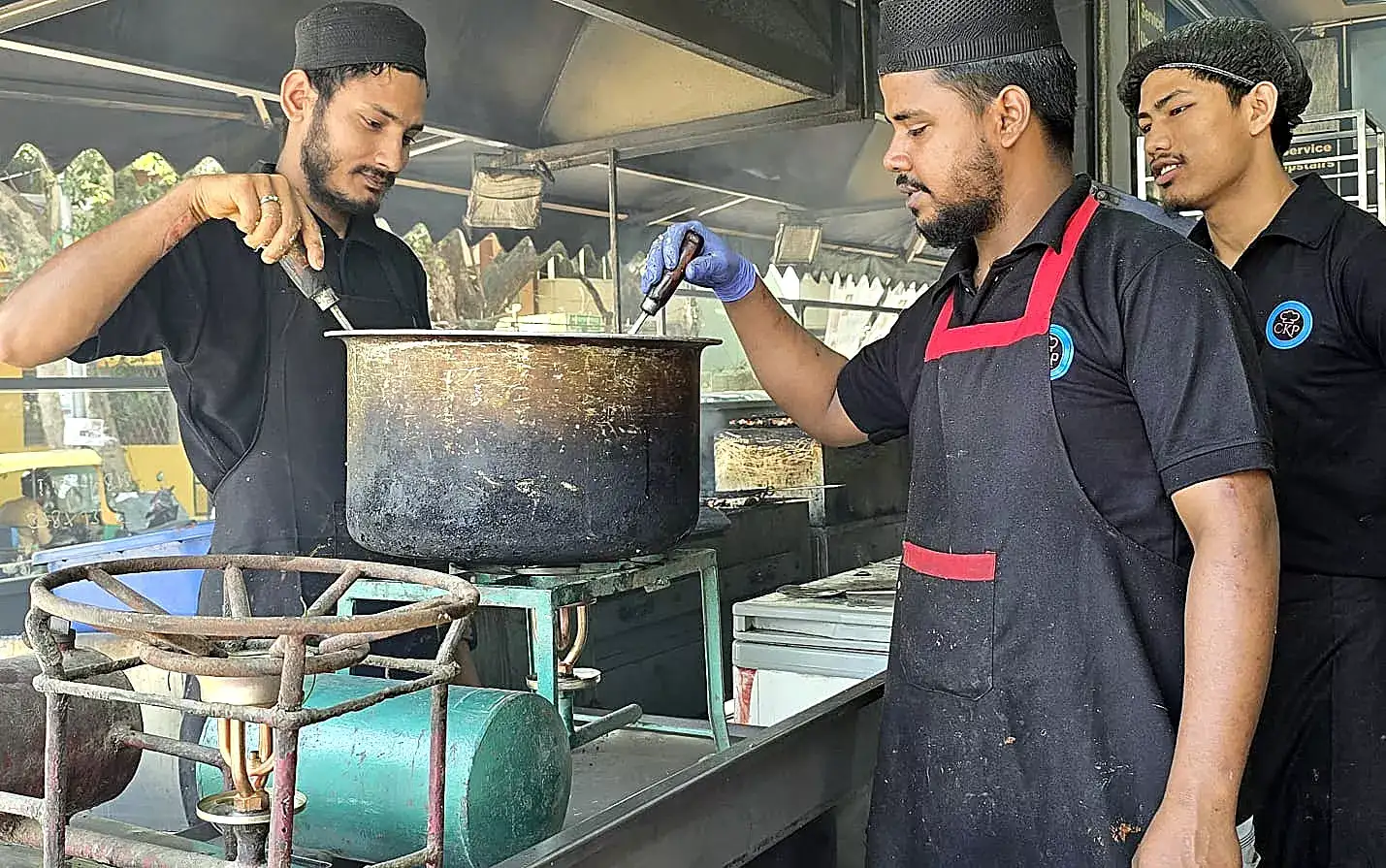
A widespread shortage of commercial LPG cylinders is severely disrupting restaurants, cloud kitchens, and QSRs in cities like Bengaluru, Delhi, and Pune. Businesses are responding by drastically trimming menus, removing discounts, and in some cases facing temporary closures, as they cannot fulfill a significant portion of orders.
The operational crisis is causing substantial daily revenue losses and affecting gig workers and staff. Restaurant associations are appealing to authorities for relief and asking food delivery platforms to remove discounts so they can preserve margins.
The impact is extending to consumers who rely on these services, with no immediate resolution in sight. The issue is identified as a production-side constraint, not a demand problem, with reports of cylinders being sold on the black market.
Main Topics: Commercial LPG shortage, restaurant industry disruption, operational and financial impact, consumer effects, industry appeals for help.
Food delivery services are expected to be affected for some more time across Bengaluru, Delhi, Pune, and other cities as restaurants are unable to fulfil orders due to a shortage in the supply of commercial LPG.
Multiple restaurant, cloud kitchen, and quick service restaurant (QSR) owners told ET that they have reduced the number of items on their menu for both dine-in and food delivery to cope with the situation.
âWe have trimmed our menu and removed discounts on food delivery apps as we are anyway unable to fulfil orders in 30% of our kitchens,â said Rashmi Daga, founder and chief executive of cloud kitchen company Fresh Menu.
Daga added that her kitchens haven't received supplies for the past three to five days. âOur inventory has run dry and we are staring at a closure by tonight.â
About 200-300 restaurants in Bengaluru have curtailed their menus to save cooking gas and continue operating for a few more days, said PC Rao, president, Bangalore Hotels Association. âWe are requesting the authorities to provide half-capacity cylinders to hotels.â
âSome restaurants are reducing their SKUs (stock keeping units) or showing some items as out of stock on our app due to the shortage,â said Aravind Sanka, founder of Rapidoâs food delivery service Ownly. The platform recently expanded across Bengaluru after piloting for about eight months in select pin codes.
âSince we donât charge commissions, we could help them earn better on our platform compared to others. Thatâs the only way we can help,â he added.
Zomato and Swiggy did not respond to ETâs queries at the time of the publication of the story.
Also Read: LPG crisis likely to sear food delivery platforms
Pervasive impact
Large and small restaurant owners across Bengaluru, Delhi, and Pune told ET that cylinder deliveries have been delayed for the past few days, resulting in losses. Some said cylinders were being sold in the black market at Rs 2,000-3,000.
âIf the situation continues, restaurants like ours could face losses of around Rs 2â3 lakh per day, considering the reduced menu, slower service, and inability to cater to our full capacity during peak hours,â said Ashish Reddy, founder, Antera Kitchen and Bar.
While the hit on revenues will vary by format, if supply remains inconsistent through the week, the revenue impact can be substantial, said Anirudh Kheny, managing partner of multiple restaurants and bars such as Suzy Q, Daisy, and Quarter House in Bengaluru. âThis is not a demand-side problem, it is a production-side constraint.â
Apart from revenue loss, businesses are also facing operational challenges with staff, gig workers, and raw materials that they are unable to utilise.
According to Saili Jahagirdar, the Pune chapter head of the National Restaurant Association of India (NRAI), about 12-15 lakh gig workers and hotel staff are affected in the city. âThe situation is worsening. We are telling food delivery firms to remove discounts so that restaurants can make some profit,â she told ET.
The impact on the food industry is likely to extend to customers too. âA lot of people, like young professionals and students living in PGs, depend on restaurants for food. So, such a disruption can have an extended impact,â said Raymond Andrews, founder of the QSR chain Biryani Blues, and added that a few of their stores have shut operations temporarily.
Many food chain founders have appealed to the authorities through social media. Ankit Nagori, founder of Curefoods, which runs EatFit, CakeZone, Sharief Bhai, Nomad Pizza, and Frozen Bottle, posted on X on Wednesday that many of their outlets will be shut today.
Multiple restaurant, cloud kitchen, and quick service restaurant (QSR) owners told ET that they have reduced the number of items on their menu for both dine-in and food delivery to cope with the situation.
âWe have trimmed our menu and removed discounts on food delivery apps as we are anyway unable to fulfil orders in 30% of our kitchens,â said Rashmi Daga, founder and chief executive of cloud kitchen company Fresh Menu.
Daga added that her kitchens haven't received supplies for the past three to five days. âOur inventory has run dry and we are staring at a closure by tonight.â
About 200-300 restaurants in Bengaluru have curtailed their menus to save cooking gas and continue operating for a few more days, said PC Rao, president, Bangalore Hotels Association. âWe are requesting the authorities to provide half-capacity cylinders to hotels.â
âSome restaurants are reducing their SKUs (stock keeping units) or showing some items as out of stock on our app due to the shortage,â said Aravind Sanka, founder of Rapidoâs food delivery service Ownly. The platform recently expanded across Bengaluru after piloting for about eight months in select pin codes.
âSince we donât charge commissions, we could help them earn better on our platform compared to others. Thatâs the only way we can help,â he added.
Zomato and Swiggy did not respond to ETâs queries at the time of the publication of the story.
Also Read: LPG crisis likely to sear food delivery platforms
Pervasive impact
Large and small restaurant owners across Bengaluru, Delhi, and Pune told ET that cylinder deliveries have been delayed for the past few days, resulting in losses. Some said cylinders were being sold in the black market at Rs 2,000-3,000.
âIf the situation continues, restaurants like ours could face losses of around Rs 2â3 lakh per day, considering the reduced menu, slower service, and inability to cater to our full capacity during peak hours,â said Ashish Reddy, founder, Antera Kitchen and Bar.
While the hit on revenues will vary by format, if supply remains inconsistent through the week, the revenue impact can be substantial, said Anirudh Kheny, managing partner of multiple restaurants and bars such as Suzy Q, Daisy, and Quarter House in Bengaluru. âThis is not a demand-side problem, it is a production-side constraint.â
Apart from revenue loss, businesses are also facing operational challenges with staff, gig workers, and raw materials that they are unable to utilise.
According to Saili Jahagirdar, the Pune chapter head of the National Restaurant Association of India (NRAI), about 12-15 lakh gig workers and hotel staff are affected in the city. âThe situation is worsening. We are telling food delivery firms to remove discounts so that restaurants can make some profit,â she told ET.
The impact on the food industry is likely to extend to customers too. âA lot of people, like young professionals and students living in PGs, depend on restaurants for food. So, such a disruption can have an extended impact,â said Raymond Andrews, founder of the QSR chain Biryani Blues, and added that a few of their stores have shut operations temporarily.
Many food chain founders have appealed to the authorities through social media. Ankit Nagori, founder of Curefoods, which runs EatFit, CakeZone, Sharief Bhai, Nomad Pizza, and Frozen Bottle, posted on X on Wednesday that many of their outlets will be shut today.
 Meridiano