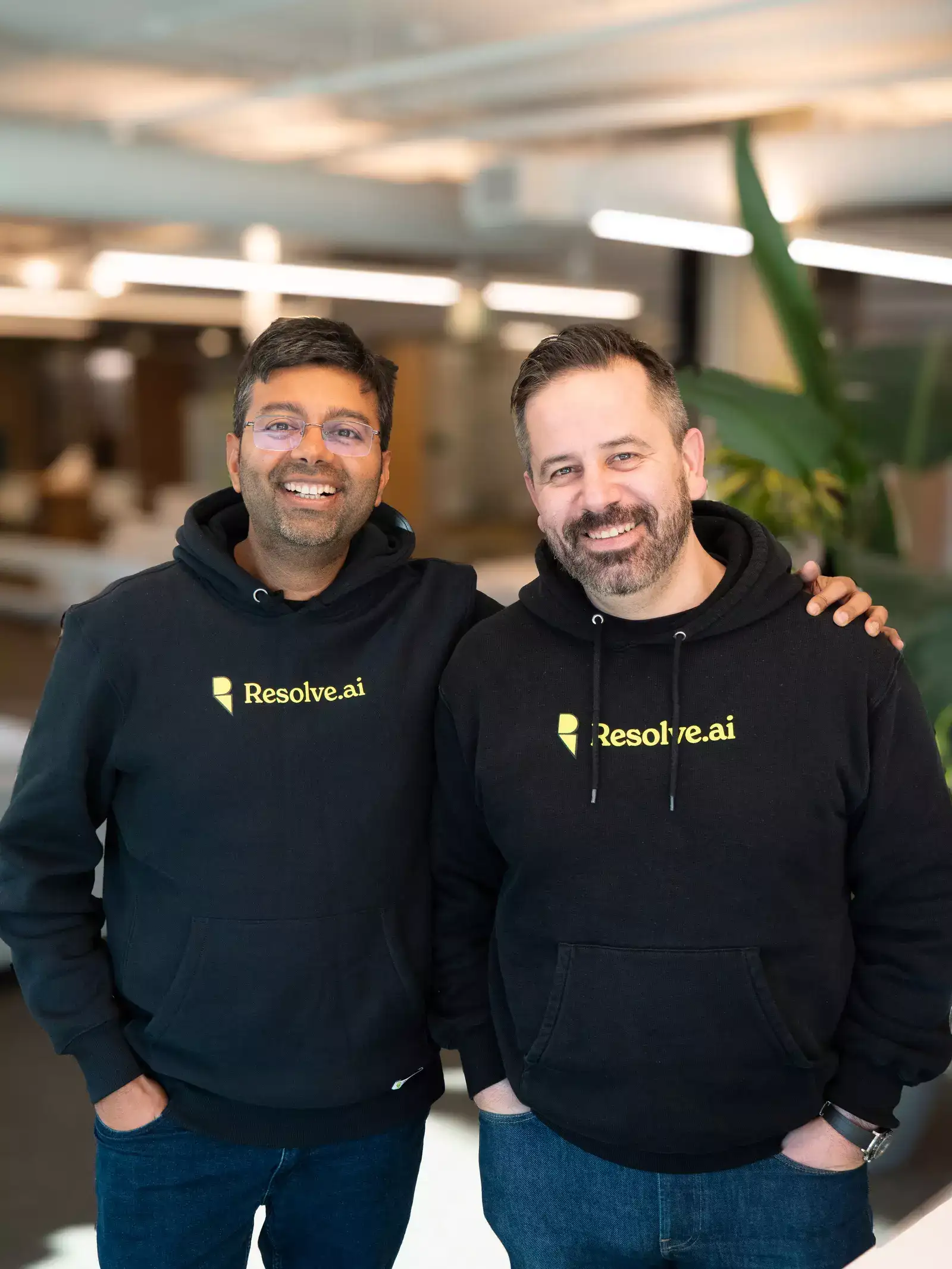
AI startups must move quickly and master the entire technology stack due to rapid AI maturation and rising customer demand. Resolve AI, a new unicorn after a $125 million funding round, provides AI tools for real-time software troubleshooting and has major clients like Salesforce and Coinbase.
The market for AI in site reliability engineering is projected to grow dramatically, driving investor interest and intense competition, including from companies building in-house solutions. Resolve AI is focusing on R&D, developing its own models and learning systems, to differentiate itself and address real-world problems with measurable impact.
Main Topics: The competitive AI startup landscape, Resolve AI's business and funding, market growth projections for AI tools, and strategies for differentiation in a crowded field.
With artificial intelligence maturing rapidly and demand from customers increasing significantly, AI startups need to move fast and stay on top of every layer of the technology stack from hardware to user experience, said Spiros Xanthos, founder and chief executive of Resolve AI, an agentic AI platform for software troubleshooting.
âI have never worked this hard in my life. It makes it very difficult to be working in AI right now but also very rewarding,â he said.
Resolve AI, founded in 2024 by former Splunk executives Xanthos and Mayank Agarwal, helps software engineers automatically detect, investigate and fix problems with software in real time using AI. According to the company, it is the software equivalent of a site reliability engineer, who ensures that the software is running smoothly without impacting operations. It also has a debugging product.
Resolve AIâs clients include Salesforce, Coinbase, ZScaler and DoorDash.
With AI writing code and technology developing at a faster pace, demand for products such as Resolve AI is on the rise. According to a Gartner report, 85% of enterprises will use AI site reliability engineering tools by 2029, compared with 5% in 2025. This is driving investor interest.
After a $125 million investment from investors such as Lightspeed Venture Partners and Greylock Ventures, Resolve AI became a unicorn last month.
âThe demand we get from startups or scaled-up companies in India for the use of AI, and adoption of AI from the people we talk to in India, is comparable to what I see on the West Coast here. I think that is impressive,â Xanthos said, speaking from the companyâs San Francisco headquarters over a virtual call.
While the company is seeing strong demand from India, it does not yet have a presence in the country. âWe see a lot of inbound demand and interest. We don't have any plans right now, but India would be one of the top places we would want to expand our engineering presence as well,â he added.
On emerging AI tools reshaping IT services, he said they present challenges but also accelerate innovation.
AI will allow developers to build more technology than they could manage in the past and that will allow them to solve more difficult problems, Xanthos said. The marketâs reaction is the realisation that AI is real and that in the medium term there are companies that are building their business without AI, he said.
With software development itself becoming commoditised, companies are looking to build products in-house, and several similar products have come up in the market, making competition intense.
Xanthos agreed that one of the biggest competitors for Resolve AI is companies looking to build in-house and that there will always be other startup companies. âBut many of the customers we have are technology companies themselves. They have great engineers. They can build solutions. They also use big vendors, right? And they choose to work with us. It comes down to the technology, the product, the effectiveness of the product,â he said.
To stay ahead of the curve and differentiate itself, Resolve AI is stepping up investments in research and development, Xanthos said. The company is utilising frontier models and are building their own. The company has also developed knowledge and memory systems that can operate in production environments that are complex and undocumented and are continuously learning from humans, he said.
In response to concerns around the AI bubble and lack of return on investment on AI investments, Xanthos said Resolve AIâs customers such as Coinbase have seen the time taken to resolve incidents improve by 72% using AI, and most of the companyâs revenue come from actual implementation of its products. âMaybe there is hype in AI, but AI is the most transformational technology of our generation. Nobody can debate that. Our ongoing principle is that we should be solving real problems that have a lot of impact, AI or not,â he said.
âI have never worked this hard in my life. It makes it very difficult to be working in AI right now but also very rewarding,â he said.
Resolve AI, founded in 2024 by former Splunk executives Xanthos and Mayank Agarwal, helps software engineers automatically detect, investigate and fix problems with software in real time using AI. According to the company, it is the software equivalent of a site reliability engineer, who ensures that the software is running smoothly without impacting operations. It also has a debugging product.
Resolve AIâs clients include Salesforce, Coinbase, ZScaler and DoorDash.
With AI writing code and technology developing at a faster pace, demand for products such as Resolve AI is on the rise. According to a Gartner report, 85% of enterprises will use AI site reliability engineering tools by 2029, compared with 5% in 2025. This is driving investor interest.
After a $125 million investment from investors such as Lightspeed Venture Partners and Greylock Ventures, Resolve AI became a unicorn last month.
âThe demand we get from startups or scaled-up companies in India for the use of AI, and adoption of AI from the people we talk to in India, is comparable to what I see on the West Coast here. I think that is impressive,â Xanthos said, speaking from the companyâs San Francisco headquarters over a virtual call.
While the company is seeing strong demand from India, it does not yet have a presence in the country. âWe see a lot of inbound demand and interest. We don't have any plans right now, but India would be one of the top places we would want to expand our engineering presence as well,â he added.
On emerging AI tools reshaping IT services, he said they present challenges but also accelerate innovation.
AI will allow developers to build more technology than they could manage in the past and that will allow them to solve more difficult problems, Xanthos said. The marketâs reaction is the realisation that AI is real and that in the medium term there are companies that are building their business without AI, he said.
With software development itself becoming commoditised, companies are looking to build products in-house, and several similar products have come up in the market, making competition intense.
Xanthos agreed that one of the biggest competitors for Resolve AI is companies looking to build in-house and that there will always be other startup companies. âBut many of the customers we have are technology companies themselves. They have great engineers. They can build solutions. They also use big vendors, right? And they choose to work with us. It comes down to the technology, the product, the effectiveness of the product,â he said.
To stay ahead of the curve and differentiate itself, Resolve AI is stepping up investments in research and development, Xanthos said. The company is utilising frontier models and are building their own. The company has also developed knowledge and memory systems that can operate in production environments that are complex and undocumented and are continuously learning from humans, he said.
In response to concerns around the AI bubble and lack of return on investment on AI investments, Xanthos said Resolve AIâs customers such as Coinbase have seen the time taken to resolve incidents improve by 72% using AI, and most of the companyâs revenue come from actual implementation of its products. âMaybe there is hype in AI, but AI is the most transformational technology of our generation. Nobody can debate that. Our ongoing principle is that we should be solving real problems that have a lot of impact, AI or not,â he said.
 Meridiano