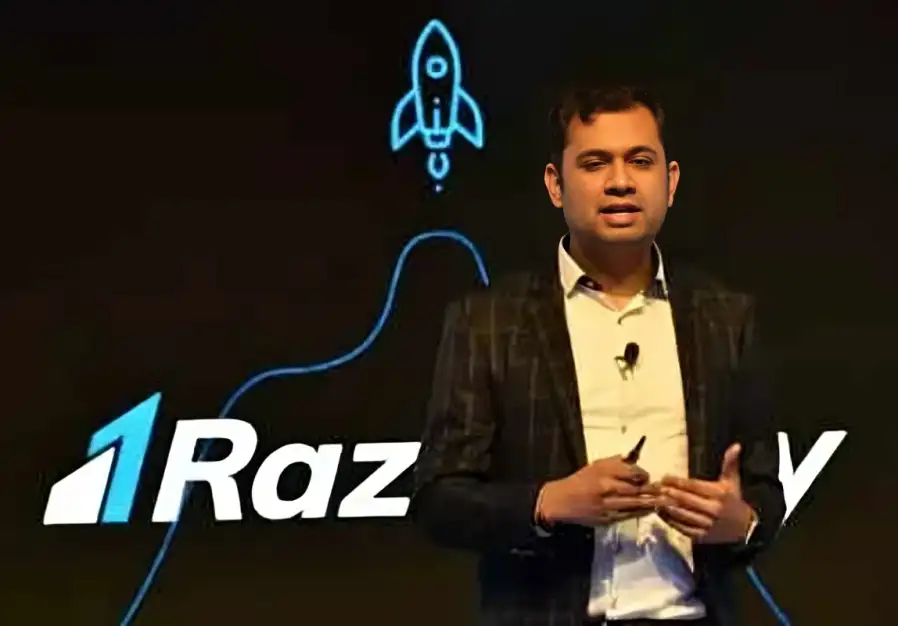
Razorpay is focusing on expanding its cross-border business by serving large global brands, positioning itself as a local partner that understands India's complex digital payment ecosystem. The company is preparing for an IPO targeted for late 2026, aiming to raise approximately Rs 4,500 crore.
It is also pivoting to become an AI-first payments company, introducing AI-powered agents for businesses and testing AI-led in-app commerce with partners like Zomato and Swiggy. CEO Harshil Mathur highlighted the challenges global payment platforms face in India, such as the need for specific integrations for Indian cards, and discussed the early-stage adoption of UPI credit lines.
Main Topics: Razorpay's business strategy (cross-border expansion, IPO plans), competition and local market advantages, adoption of UPI credit, and AI integration in payments.
Digital payment major Razorpay is focussing on deploying its payments stack to large global brands in a bid to grow the cross-border business, which has better gross margins. The platform already serves international clients such as Replit, Airbnb, Decathlon, and McDonald's, among others.
Competing with the likes of Stripe and Adyen, which have also set up India businesses and have secured regulatory licences as well, Harshil Mathur, chief executive officer (CEO), said that Razorpay offers full-stack Indian digital payment services across UPI, cards, UPI Autopay, recurring payments, and others.
âGlobal companies typically treat India as one of many markets. But for many merchants, India is a primary market. To operate successfully here, you need a local partner who understands the complexities of the ecosystem,â he told ET on the sidelines of FTX 2026.
Highlighting some of the challenges that global players can face in India, Mathur said many merchants donât realise that Indian cards often do not work seamlessly on global payment platforms. They require special integrations such as card tokenisation, data localisation, and recurring payment rules. If those guidelines are not implemented, only 30% of customers can complete transactions, he said.
The company is preparing for an initial public offer (IPO) targeted for late 2026, aiming to raise approximately Rs 4,500 crore. Mathur said that Razorpay processes $180 billion worth of transactions annually. He, however, did not share any details on the planned listing.
Speaking on the adoption of UPI credit, Mathur said that while credit cards are seeing an uptick in usage, UPI credit lines are still early, calling it a âchicken-and-egg problem' â where more consumers drive merchant adoption, and more merchants will attract more consumers.
âMerchants need to enable acceptance of these instruments. There is also a cost element due to the merchant discount rate (MDR). Once more merchants enable it, adoption will increase,â he said.
The AI pivot
Positioning itself as an artificial intelligence (AI)-first payments company, Razorpay introduced building AI-powered agents for payments using Anthropic's Claude chatbot on Thursday. These agents on the platform will help businesses create custom agents, integrate payments, and manage payment operations. They can connect to Shopify, Shiprocket, and WhatsApp.
Mathur said Razorpay is testing AI-led in-app commerce with Zomato, Swiggy, PVR INOX, and Vodafone Idea.
Mathur also highlighted that marketing and advertising will go through a transformation. He said agents may recommend products but also show sponsored options. âUltimately, businesses will have to adapt to how customers want to interact. If customers prefer chatting with an AI to make purchases, companies will have to restructure their models around that behaviour.â
Competing with the likes of Stripe and Adyen, which have also set up India businesses and have secured regulatory licences as well, Harshil Mathur, chief executive officer (CEO), said that Razorpay offers full-stack Indian digital payment services across UPI, cards, UPI Autopay, recurring payments, and others.
âGlobal companies typically treat India as one of many markets. But for many merchants, India is a primary market. To operate successfully here, you need a local partner who understands the complexities of the ecosystem,â he told ET on the sidelines of FTX 2026.
Highlighting some of the challenges that global players can face in India, Mathur said many merchants donât realise that Indian cards often do not work seamlessly on global payment platforms. They require special integrations such as card tokenisation, data localisation, and recurring payment rules. If those guidelines are not implemented, only 30% of customers can complete transactions, he said.
The company is preparing for an initial public offer (IPO) targeted for late 2026, aiming to raise approximately Rs 4,500 crore. Mathur said that Razorpay processes $180 billion worth of transactions annually. He, however, did not share any details on the planned listing.
Speaking on the adoption of UPI credit, Mathur said that while credit cards are seeing an uptick in usage, UPI credit lines are still early, calling it a âchicken-and-egg problem' â where more consumers drive merchant adoption, and more merchants will attract more consumers.
âMerchants need to enable acceptance of these instruments. There is also a cost element due to the merchant discount rate (MDR). Once more merchants enable it, adoption will increase,â he said.
The AI pivot
Positioning itself as an artificial intelligence (AI)-first payments company, Razorpay introduced building AI-powered agents for payments using Anthropic's Claude chatbot on Thursday. These agents on the platform will help businesses create custom agents, integrate payments, and manage payment operations. They can connect to Shopify, Shiprocket, and WhatsApp.
Mathur said Razorpay is testing AI-led in-app commerce with Zomato, Swiggy, PVR INOX, and Vodafone Idea.
Mathur also highlighted that marketing and advertising will go through a transformation. He said agents may recommend products but also show sponsored options. âUltimately, businesses will have to adapt to how customers want to interact. If customers prefer chatting with an AI to make purchases, companies will have to restructure their models around that behaviour.â
 Meridiano