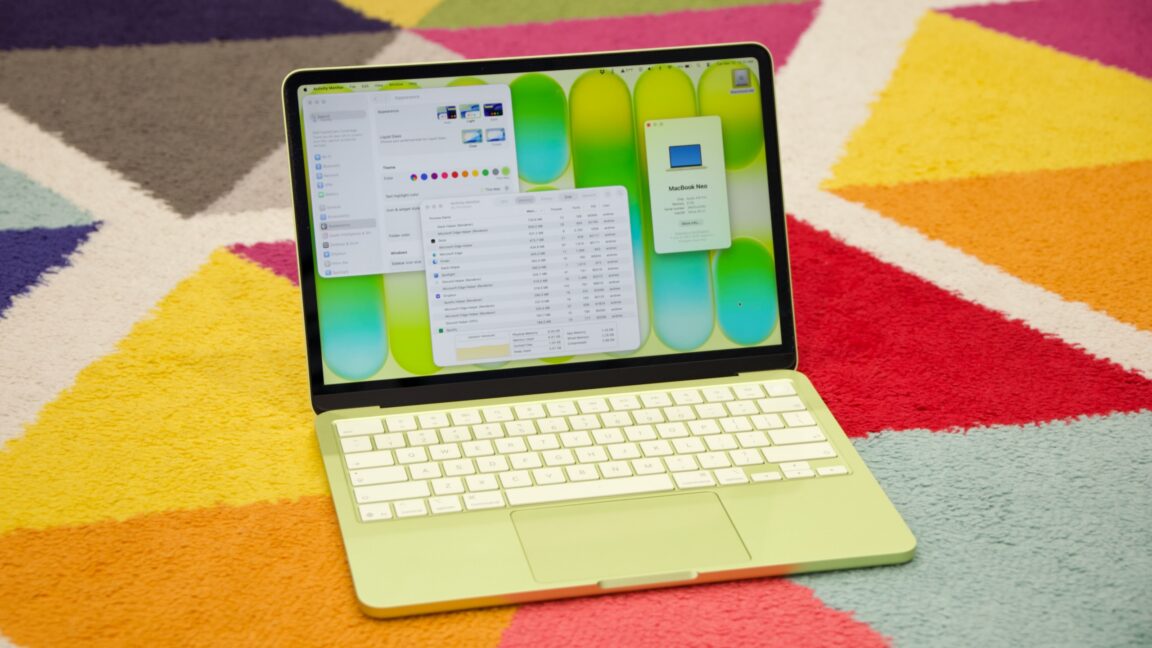
Apple has introduced the MacBook Neo, a sub-$1,000 laptop starting at $599, marking its entry into the budget laptop market to compete with Windows and Chromebook devices.
A key feature is its more modular and repairable internal design, a departure from other modern MacBooks, making component replacements like the battery simpler and less tool-intensive.
The most notable repairability improvement is a keyboard that is a separate, replaceable component, unlike recent MacBooks where it is integrated into an expensive unified "top case" assembly.
Main Topics: Apple MacBook Neo launch, competitive pricing and market positioning, improved modularity and repairability, specific design changes to the keyboard and battery.
Apple’s MacBook Neo is the company’s first serious effort to break into the sub-$1,000 laptop business, challenging midrange Windows laptops and Chromebooks with its $599 starting price and its focus on build quality rather than high-end performance.
One less-advertised change that may make the Neo more appealing to businesses, schools, and the accident-prone is that its internal design is a bit more modular and easier to repair than other modern MacBooks. That’s our takeaway after spending some time thumbing through the official MacBook Neo repair documentation that Apple published on its support site this week.
Replacements for pretty much any component in the Neo are simpler and involve fewer steps and tools than in the M5 MacBook Air. That includes the battery, which in the MacBook Air is attached to the chassis with multiple screws and adhesive strips but which in the Neo comes out relatively easily after you get some shielding and flex cables out of the way.
But the most significant change in the Neo is that the keyboard is its own separate component. For essentially all modern MacBooks, going back at least as far as the late-2000s unibody aluminum MacBook designs, the keyboard has been integrated into the top part of the laptop case and is extremely difficult, if not impossible, to replace independently.
Apple refers to this big, unified component as the “top case,” and anyone who has ever had to pay to repair one out of warranty can attest to how expensive they are. For the old M1 MacBook Air, a top case from Apple’s first-party self-service parts store will run you about $220 after you send the old defective part back to Apple. For the 14-inch MacBook Pro, Apple will only sell you a top case replacement along with a battery, which costs a whopping $440 after you send the old component back to the company.
 Meridiano