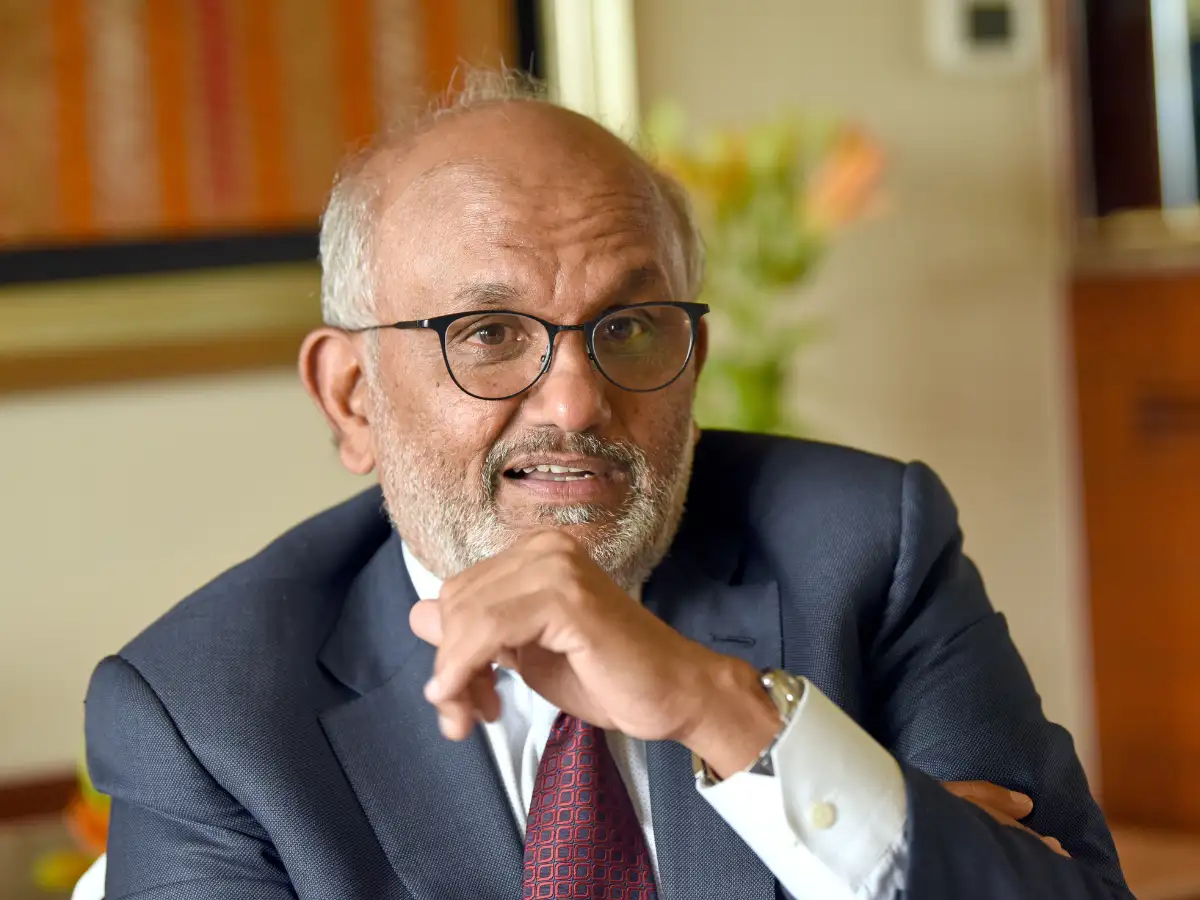
Shantanu Narayen will step down as CEO of Adobe after nearly two decades, remaining as board chair to support his successor. Under his leadership, Adobe transformed from selling boxed software to a cloud-based subscription model, with annual revenue growing from around $3 billion in 2007 to $23.7 billion by 2025.
The article details Narayen's early life in India, his education in engineering and business in the U.S., and his early career at companies like Apple and a digital photo-sharing startup. It then outlines his rise within Adobe, from joining in 1998 to becoming CEO in 2007.
Finally, it covers his broader industry roles, including serving on the board of Pfizer, and positions him as part of a prominent group of Indian-born global tech leaders.
Main topics: Narayen's CEO transition and tenure at Adobe; his biography and early career; his external board roles and influence.
Shantanu Narayen will step down from his role as CEO of Adobe after leading the company for almost two decades. He will leave the position once a successor is chosen, though he will remain chair of the board to support the incoming chief executive, the company said.
During his tenure, Narayen oversaw a major transformation at Adobe. The company shifted from selling boxed software to operating a cloud-based subscription model, dramatically reshaping its business. Annual revenue grew from around $3 billion in 2007 to $23.7 billion by the end of 2025, according to data from research platform Macrotrends.
Early life
Narayen was born on May 27, 1963 in Hyderabad into a Telugu family.
His father managed a plastics business, while his mother taught American literature, according to The Times of India. The family environment blended entrepreneurial thinking with exposure to Western writing and culture, a rare mix in India during the 1960s.
Narayen studied at Hyderabad Public School, which would later also count Satya Nadella, CEO of Microsoft, among its alumni.
Education: Engineering, computer science and business
After school, Narayen pursued a bachelorâs degree in electronics and communication engineering at University College of Engineering, Osmania University, Hyderabad.
Like many Indian engineers of his generation, he moved to the United States for higher studies in the mid-1980s. He earned a masterâs degree in computer science at Bowling Green State University in Ohio in 1986.
During his time in Ohio, he met Reni, who later became his wife and went on to earn a doctorate in clinical psychology.
Narayen continued studying while working, eventually completing an MBA from the Haas School of Business, University of California, Berkeley, in 1993. He attended classes at night while working full-time, combining engineering and business training that would later shape his leadership style.
Early career: Apple, Silicon Graphics and a startup venture
Narayen began his professional journey in 1986 at Measurex Automation Systems, a Cupertino, California-based company that developed computer control systems, sensors, and software.
In 1989, he joined tech giant Apple, where he worked in product development roles until 1995. These years placed him inside one of the worldâs most influential technology companies.
He later moved to Silicon Graphics, a computer hardware and software manufacturer, serving as director of desktop and collaboration products.
In 1996, Narayen cofounded Pictra Inc., an early startup focused on digital photo sharing over the internet. Although Pictra did not become widely known, it reflected his early interest in digital imaging and online content, areas that would later be central to Adobeâs growth.
Joining Adobe and rise to CEO
Narayen joined Adobe in 1998 as vice president and general manager of the engineering technology group.
Over time, he took on several leadership roles inside the company, including:
Before becoming CEO, he served as president and chief operating officer, overseeing global operations, product research and development, marketing, and corporate development.
He was appointed CEO in December 2007.
Industry roles, boards and public service
Beyond his work at Adobe, Narayen has held several influential positions in business and policy.
He currently sits on the board of global biopharmaceutical research corporation Pfizer and serves as vice chairman of the US-India Strategic Partnership Forum (a non-profit organisation to strengthen US-India ties).
Earlier in his career, he was a director at tech company Dell and served on the US Presidentâs Management Advisory Board, which was established in 2010 to counsel the US government on management practices and the use of technology in federal operations.
Narayen is also:
He holds five patents and frequently speaks at industry and academic events.
Recognition and influence among global tech leaders
Narayenâs career reflects the wider rise of Indian-born leaders in major US technology companies, alongside executives such as Satya Nadella at Microsoft and Sundar Pichai at Alphabet.
His leadership has received wide recognition:
In 2019, he received the Padma Shri, Indiaâs fourth-highest civilian honour, and was also named Global Indian of the Year by The Economic Times.
Narayenâs 2025 compensation
According to research platform Bullfincher, Narayen received total compensation of $51.17 million in 2025. This represented a 2.38% decline compared with an estimated $52 million in 2024. The package included salary, bonuses, stock awards and other benefits.
During his tenure, Narayen oversaw a major transformation at Adobe. The company shifted from selling boxed software to operating a cloud-based subscription model, dramatically reshaping its business. Annual revenue grew from around $3 billion in 2007 to $23.7 billion by the end of 2025, according to data from research platform Macrotrends.
Early life
Narayen was born on May 27, 1963 in Hyderabad into a Telugu family.
His father managed a plastics business, while his mother taught American literature, according to The Times of India. The family environment blended entrepreneurial thinking with exposure to Western writing and culture, a rare mix in India during the 1960s.
Narayen studied at Hyderabad Public School, which would later also count Satya Nadella, CEO of Microsoft, among its alumni.
Education: Engineering, computer science and business
After school, Narayen pursued a bachelorâs degree in electronics and communication engineering at University College of Engineering, Osmania University, Hyderabad.
Like many Indian engineers of his generation, he moved to the United States for higher studies in the mid-1980s. He earned a masterâs degree in computer science at Bowling Green State University in Ohio in 1986.
During his time in Ohio, he met Reni, who later became his wife and went on to earn a doctorate in clinical psychology.
Narayen continued studying while working, eventually completing an MBA from the Haas School of Business, University of California, Berkeley, in 1993. He attended classes at night while working full-time, combining engineering and business training that would later shape his leadership style.
Early career: Apple, Silicon Graphics and a startup venture
Narayen began his professional journey in 1986 at Measurex Automation Systems, a Cupertino, California-based company that developed computer control systems, sensors, and software.
In 1989, he joined tech giant Apple, where he worked in product development roles until 1995. These years placed him inside one of the worldâs most influential technology companies.
He later moved to Silicon Graphics, a computer hardware and software manufacturer, serving as director of desktop and collaboration products.
In 1996, Narayen cofounded Pictra Inc., an early startup focused on digital photo sharing over the internet. Although Pictra did not become widely known, it reflected his early interest in digital imaging and online content, areas that would later be central to Adobeâs growth.
Joining Adobe and rise to CEO
Narayen joined Adobe in 1998 as vice president and general manager of the engineering technology group.
Over time, he took on several leadership roles inside the company, including:
- Vice president and general manager of engineering technology
- Senior vice president of worldwide product development
- Executive vice president of worldwide products
Before becoming CEO, he served as president and chief operating officer, overseeing global operations, product research and development, marketing, and corporate development.
He was appointed CEO in December 2007.
Industry roles, boards and public service
Beyond his work at Adobe, Narayen has held several influential positions in business and policy.
He currently sits on the board of global biopharmaceutical research corporation Pfizer and serves as vice chairman of the US-India Strategic Partnership Forum (a non-profit organisation to strengthen US-India ties).
Earlier in his career, he was a director at tech company Dell and served on the US Presidentâs Management Advisory Board, which was established in 2010 to counsel the US government on management practices and the use of technology in federal operations.
Narayen is also:
- President of the board of the Adobe Foundation, supporting global philanthropic initiatives.
- A member of the advisory board at the Haas School of Business.
He holds five patents and frequently speaks at industry and academic events.
Recognition and influence among global tech leaders
Narayenâs career reflects the wider rise of Indian-born leaders in major US technology companies, alongside executives such as Satya Nadella at Microsoft and Sundar Pichai at Alphabet.
His leadership has received wide recognition:
- Named among the worldâs best CEOs by Barron's in 2016 and 2017.
- Featured on Fortuneâs Businessperson of the Year lists.
- Ranked a Top CEO by Glassdoor based on employee feedback.
In 2019, he received the Padma Shri, Indiaâs fourth-highest civilian honour, and was also named Global Indian of the Year by The Economic Times.
Narayenâs 2025 compensation
According to research platform Bullfincher, Narayen received total compensation of $51.17 million in 2025. This represented a 2.38% decline compared with an estimated $52 million in 2024. The package included salary, bonuses, stock awards and other benefits.
 Meridiano