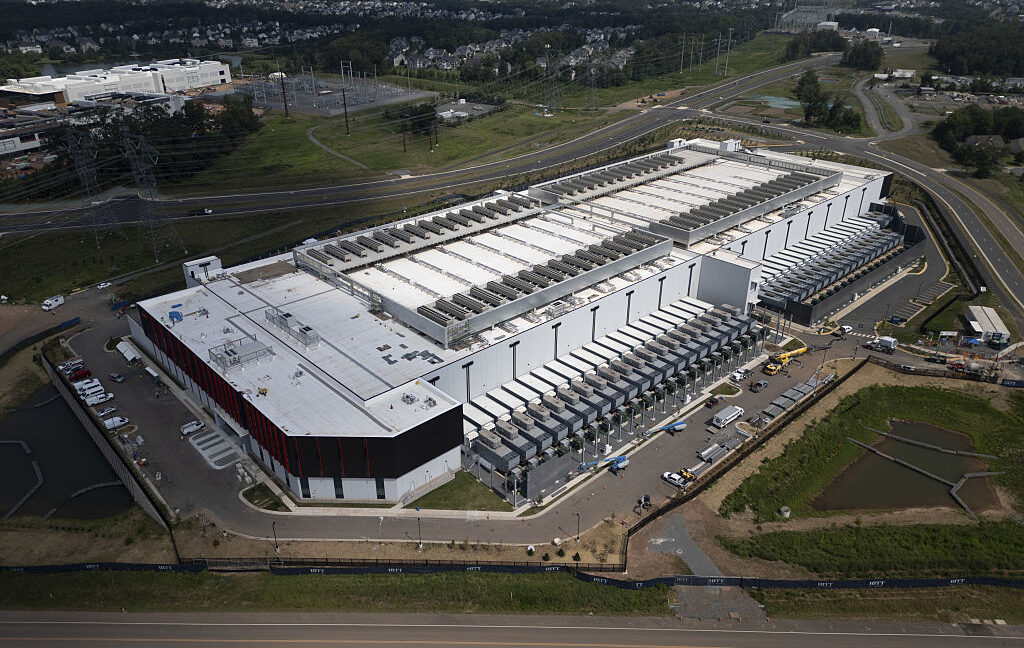
Major U.S. tech companies are pledging to build their own power plants for data centers, aiming to shield consumers from rising electricity costs driven by AI's energy demand. The pledge, championed by President Trump, will be signed by executives from Amazon, Google, Meta, and others at a White House event.
However, experts warn it is likely impossible to fully insulate consumers from the increased demand, as data center power needs are projected to more than triple by 2035. Significant logistical obstacles exist, including shortages of necessary equipment like gas turbines and broader grid infrastructure challenges contributing to higher costs.
The main topics covered are the tech industry's pledge on power generation, the political and consumer pressure over rising electricity bills, and the practical challenges and skepticism surrounding the plan's feasibility.
Big Tech is set to agree to build its own power plants for data centers and shield consumers from rising electricity costs, but companies face daunting logistical obstacles to delivering on the pledge championed by President Donald Trump.
At a White House event on Wednesday, executives from Amazon, Google, Meta, Microsoft, xAI, Oracle, and OpenAI are due to sign the pledge to supply their own power instead of relying on a grid connection.
Trump hailed the plan in his State of the Union speech last week, promising US consumers that “no one’s prices will go up” as a result of “energy demand from AI data centers.”
But industry executives have suggested the commitment will not be binding, while experts warn it is likely impossible to fully insulate consumers from the extra power demand coming from the vast expansion of data centers to run AI.
“Regardless of how these data centers connect, behind the meter or as part of the network, you’re going to increase demand,” said Ari Peskoe, director at Harvard Law School’s Electricity Law Initiative.
Independent power supplies for data centers most often come from gas turbines, which are in short supply and not always designed to provide continuous power. “We still need more of these turbines,” Peskoe added.
Trump’s pressure on big data center operators comes in response to consumer backlash and political pressure over rising power bills.
On the campaign trail in 2024, Trump pledged to cut energy bills in half within a year of taking office.
In reality, residential electricity costs rose by 6 percent nationwide in February, compared with a year before, according to the US Energy Information Administration.
States such as New Jersey and Pennsylvania, which have clusters of data centers, reported bigger increases at 16 percent and 19 percent respectively.
Natural gas prices, extreme weather, and the need to upgrade aging grid infrastructure have all contributed to higher costs—after decades of low investment in power plants and transmission lines. The hit to energy supplies from Trump’s war against Iran could add to the problem.
Critics of data centers say they are increasing energy bills by adding to demand. US data center power demand will more than triple by 2035, rising from almost 35 gigawatts in 2024 to 106 GW, according to data from BloombergNEF.
 Meridiano