 Meridiano
Article Details
- Title
- Article: M5 Pro and M5 Max are surprisingly big departures from older Apple Silicon
- Impact Score
- 5 / 10
- AI Summary (Processed Content)
-
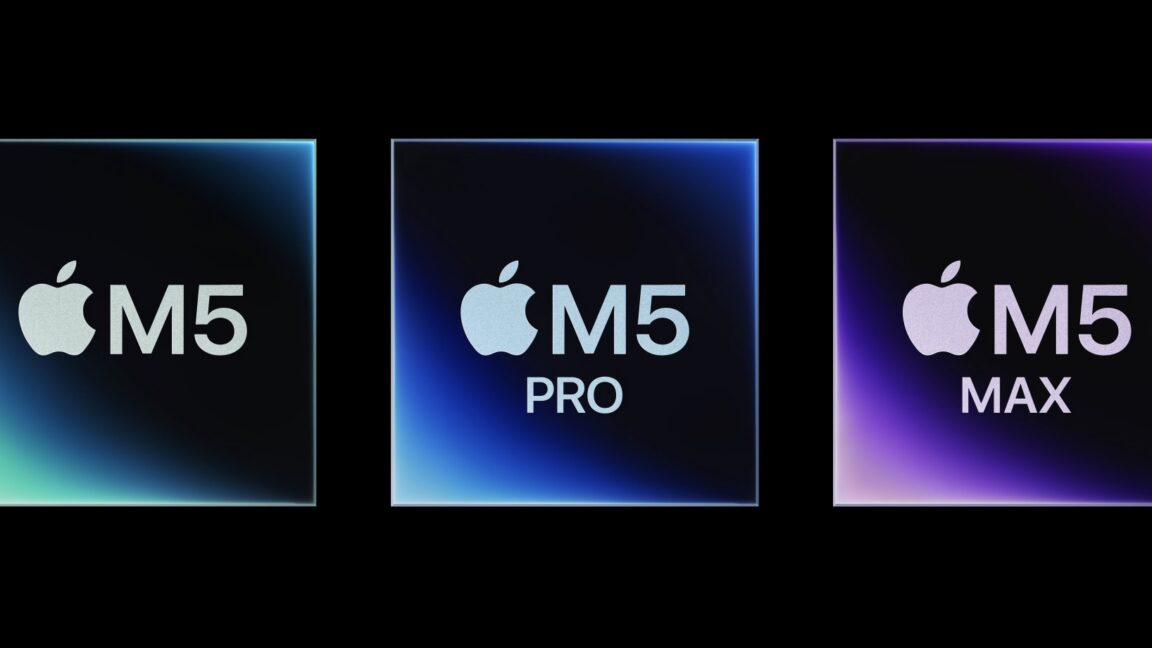
Apple has introduced the M5 Pro and M5 Max chips alongside new MacBook Pros, marking a significant architectural departure from past generations. The chips utilize a new "Fusion Architecture" that combines two distinct chiplets—one for the CPU and I/O, and another primarily for graphics—into a single processor package.
While performance impact remains untested, the technical details reveal a unified CPU/I/O chiplet across both Pro and Max variants, containing an 18-core CPU and a 16-core Neural Engine. This design contrasts with previous scaling methods and Apple's prior use of chiplet fusion only for creating Ultra chips.
The main topics covered are the announcement of the M5 Pro and M5 Max chips, their new Fusion Architecture and chiplet design, and a comparison to previous Apple Silicon generations.
- Original URL
- https://arstechnica.com/gadgets/2026/03/m5-pro-and-m5-max-are-surprisingly-big-departures-from-older-apple-silicon/
- Source Feed
- Ars Technica
- Published Date
- 2026-03-03 18:41
- Fetched Date
- 2026-03-04 14:27
- Processed Date
- 2026-03-04 15:37
- Embedding Status
- Present
- Cluster ID
- Not Clustered
- Raw Extracted Content