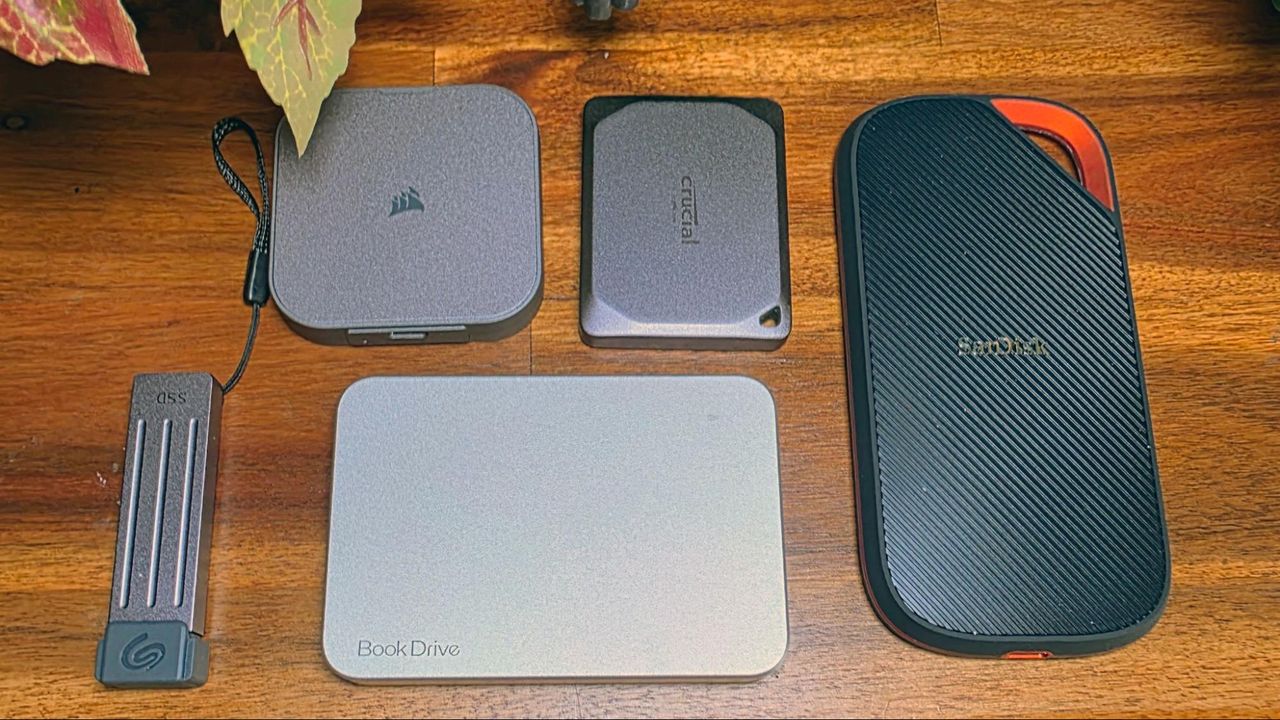
The voracious hardware demands of AI hyperscalers are driving up prices and reducing availability for PC components, including external SSDs, with prices nearly doubling from recent lows. New external drive launches in 2026 are expected to be scarce, and some new models may use lower-quality NAND flash, resulting in shockingly poor sustained write performance. A specific Orico drive review sample demonstrated this issue, with write speeds dropping to 60-80 MB/s after its cache was saturated—slower than many hard drives.
While one bad drive doesn't define the entire market, major new product announcements are few, and those that do launch, like a new SanDisk model, are coming at significantly higher price points. Consumers needing an external SSD may want to consider purchasing soon or looking for older stock, as the combination of rising costs and potential performance compromises in new drives creates a challenging market.
Main Topics: AI-driven hardware shortages and price increases, declining performance in new external SSDs, market analysis and consumer advice for storage purchases.
How to protect yourself from bad external SSDs during the PC hardware apocalypse – newer drives will definitely cost more, and some may offer up shockingly poor performance
You should consider buying a portable drive that was made before AI hardware demands seemingly gobbled up all the good flash.
Get Tom's Hardware's best news and in-depth reviews, straight to your inbox.
You are now subscribed
Your newsletter sign-up was successful
The voracious hardware demands on AI hyperscalers have been driving up prices (and driving down availability) of all kinds of PC hardware for half a year now. If you’re after a new external SSD, prices have so far nearly doubled from their all-time lows. But compared to the price of RAM, an RTX 5090, or an internal SSD, spending 70-80% more for external storage than you would have paid this time last year is a relative bargain.
And if you do need a new external drive, you might want to buy one soon. Because new drive launches in 2026 seem to be few and far between, as we should expect given the current demands on the supply of flash storage. And it seems likely that the few companies that are launching new external drives may be having to make do with some… less-than-ideal NAND. Exhibit A: Take a look at the sustained writes from this Orico drive I recently reviewed.
In our real-world file transfer test, it was at least in the range of other drives of its class.
Article continues belowBut when it comes to sustained write speeds, the results were the worst I’ve seen for any SSD since I started testing external storage for Tom’s Hardware. We use Iometer to hammer the SSD with sequential writes for 15 minutes to measure the size of the write cache and performance after the cache is saturated.
Keep in mind that we tested a 512GB review sample, so the faster SLC cache will be larger on higher-capacity models. But if and when you do enough fast writing to hit the native NAND speed, you are looking at writes in the 60-80 MB/s range – with occasional dips below 50 MB/s.
This performance was so low that I reached out to Orico to make sure this was the expected speed and we weren’t dealing with a faulty drive. A representative told me that, while higher-capacity models would have more SLC cache and perform slightly better overall, “the product is functioning normally and there are no quality issues.”
In short, the drive was working as expected, while delivering sustained write speeds that are worse than hard drive write speeds, and even worse than many of the best flash drives we’ve tested. I had to get a closer look.
Opening the BookDrive
Prying the BookDrive open, the controller for the internal M.2 drive is a DRAMless Maxiotek map1202C, which Google tells me has been used in various drives going back as far as 2019. I couldn’t identify the maker of the flash, though. Neither the two alphanumeric strings silkscreened on the NAND packages showed up in search results, and there doesn’t seem to be another label underneath what’s on the surface of the chips.
But regardless of who made them, the flash in this “new” external SSD has the slowest write performance of any solid-state drive I’ve tested in at least a decade – and possibly ever. Even Intel’s 2008-era X25-M internal SSD managed to hit 72.2 MB/s writes in our testing — I didn’t start testing SSDs until sometime in 2009.
External storage in 2026
Granted, the surprisingly bad performance of one recent drive may not definitively tell us a whole lot about all the external storage drives launching in 2026. But we’re already in mid-March, and Sandisk is the only major SSD company I’m aware of that has announced new portable drives this year. We’re awaiting those SSDs for testing, and I fully expect them to perform much better than the Orico drive above.
But Sandisk’s new mid-range (20 Gbps) Extreme V3 drive sells for $459.99 direct from SanDisk (supposedly marked down from $574.99). And given the 20 Gbps interface bandwidth cap, how much better could that new drive be than Crucial’s X10 Pro drive that I tested (and was generally impressed by) back in 2023? Parent company Micron may have publicly ditched its consumer-focused Crucial brand in favor of the lucrative AI market late last year, but the X10 Pro is still readily available, and at a current $259 for the 2TB model, it’s priced $200 (just shy of 44%) less than Sandisk’s brand-new drive at the same capacity.
It seems pretty safe to assume that any new external SSDs from big-name brands will be priced similarly to Sandisk’s recently announced drives. Because, from a business standpoint, any stock that flash companies are holding back from their eager AI customers to put into consumer products is probably a financial risk. And any new product from smaller drive makers (generally those who aren’t making their own flash), if there are many new products at all, will have to make do with whatever scrap flash is available that both AI companies and the flash makers themselves don’t want. Chances are, both the performance and the endurance of the flash in those drives will be questionable at best.
Buy soon, and consider an older SSD
In short, if you need a new solid-state external drive, I would advise looking at something that came out more than six months ago (before the rise of AI hyperscaler demand), that has been thoroughly tested (by Tom’s Hardware or some other site you trust), and that is still available at a reasonable price. Our Best External SSD page has six great solid-state options that we’ve tested.
Because who knows how long the stock of those older drives is going to last? While some new drives this year may be a little faster, they’re almost certainly going to be significantly more expensive than what’s available now. Any new drives from smaller companies may fail to meet even basic SSD performance expectations from several years ago. If you wait long enough and the market doesn’t improve, you may be stuck buying a drive that both costs much more and performs much worse than what’s available now.
After a rough start with the Mattel Aquarius as a child, Matt built his first PC in the late 1990s and ventured into mild PC modding in the early 2000s. He’s spent the last 15 years covering emerging technology for Smithsonian, Popular Science, and Consumer Reports, while testing components and PCs for Computer Shopper, PCMag and Digital Trends.
 Meridiano