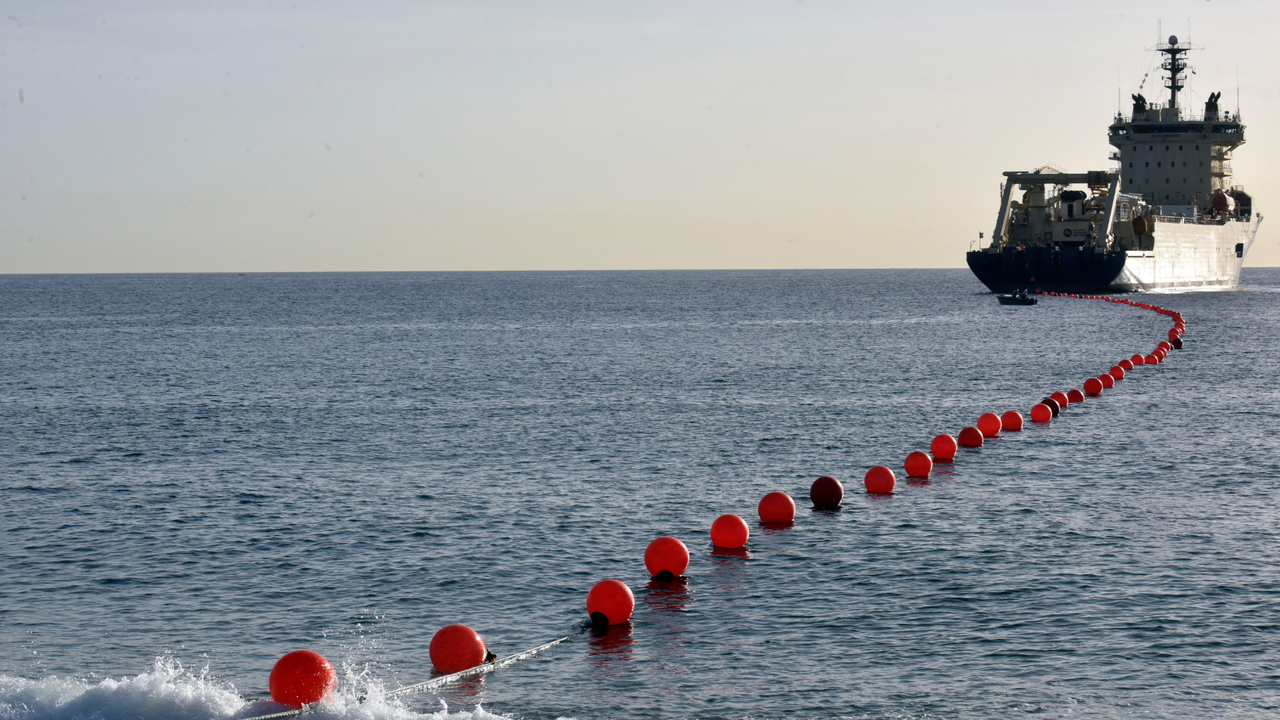
Meta's 2Africa undersea cable project is delayed as its cable-laying contractor declared force majeure, citing unsafe operating conditions in the Persian Gulf due to the U.S.-Israel-Iran conflict. This specifically halts the "Pearls" segment, which was to connect Gulf states, Pakistan, and India to the network.
This follows a previous delay in the Red Sea section caused by Houthi attacks, highlighting how regional conflicts disrupt critical infrastructure by increasing risks and costs. The article notes other tech infrastructure has been affected, including AWS data centers hit by drone attacks.
Beyond the Middle East, undersea cables globally face threats from "shadow fleet" vessels, prompting Meta's planned Project Waterworth to bypass geopolitical hotspots, though it is years from completion.
Main Topics: Geopolitical conflict impacting tech infrastructure, delays to Meta's 2Africa undersea cable project, broader threats to global undersea cable networks.
Iran conflict delays Meta’s 2Africa undersea cable project — cable layer declares force majeure, says it can no longer safely operate in the Persian Gulf
The Iran war is going to be costly for the tech sector.
Get Tom's Hardware's best news and in-depth reviews, straight to your inbox.
You are now subscribed
Your newsletter sign-up was successful
Meta’s Africa2 undersea cable project, which was meant to connect African coastal states to Europe and Asia, is facing a major roadblock due to the ongoing U.S.-Israel-Iran conflict. According to Bloomberg, Alcatel Submarine Networks (ASN), the company contracted to lay the fiber-optic cables for the project, declared force majeure, saying that it can no longer safely operate in the Persian Gulf.
While Meta announced the completion of the core of the project, it’s still working on the Pearls section of the network, which was intended to connect Persian Gulf states, including Iraq, Kuwait, Saudi Arabia, Bahrain, Qatar, United Arab Emirates, and Oman, as well as Pakistan and India, to the rest of Africa and several European countries. The publication says that the bulk of the undersea cable has already been laid but is yet to be connected to the onshore landing stations.
This isn’t the first time that the Africa2 project has experienced disruption. Late last year, the project’s Red Sea section was delayed due to Houthi strikes in the area, alongside permitting issues. Because conflicts increase the danger to life and property, there are fewer operators willing to operate in such theaters, and those that do often charge a heavy premium to account for the higher risk and more expensive insurance costs. Aside from that, it also increases the chance that existing undersea cables will get damaged, and that military action in the area will cause repairs to be delayed for several months.
Article continues belowThe Pearls extension is considered to be a good substitute for the Red Sea corridor, which has been experiencing instability due to attacks from Houthi rebels from Yemen. In fact, the section is scheduled to go online this year, until the U.S.-Israel military action against Iran derailed Meta’s plans. The Africa2 undersea cable project isn’t the only tech infrastructure that has been affected by the 2026 Iran war — we’ve already seen several Amazon Web Services data centers deliberately hit by Iranian drone attacks, and the country has also threatened several tech firms based in the Middle East. We’ve also seen Stryker, a major American medical technology company, hit by a cyberattack that resulted in the disruption of its global operations.
Aside from the trouble in the Middle East, undersea cables in Europe and East Asia are constantly under threat from being cut by ships that are part of “shadow fleets” — vessels with murky ownerships but often indirectly controlled by states like Russia and China conducting hybrid warfare. Because of this, Meta has been planning to build a 50,000-km (30,000-mile) long undersea cable that will bypass current geopolitical hotspots called Project Waterworth. But despite being announced for 2025, it’s expected that it will take several more years before it is completed and goes online.
Follow Tom's Hardware on Google News, or add us as a preferred source, to get our latest news, analysis, & reviews in your feeds.
Get Tom's Hardware's best news and in-depth reviews, straight to your inbox.
Jowi Morales is a tech enthusiast with years of experience working in the industry. He’s been writing with several tech publications since 2021, where he’s been interested in tech hardware and consumer electronics.
 Meridiano