ByteDance, the Chinese parent company of TikTok, plans to access a powerful AI computing cluster containing 36,000 Nvidia B200 Blackwell GPUs located in Malaysia through a cloud operator named Aolani. Nvidia and the U.S. Department of Commerce confirm the arrangement complies with current export controls, as the hardware is physically located outside of China and ByteDance is not on any restricted entity lists.
The $2.5 billion cluster will be formally owned and operated by Malaysia-based Aolani Cloud, which has been leasing AI servers to ByteDance since early 2025. The deal leverages a provision in U.S. rules that regulates where advanced hardware is shipped, not necessarily where its computing power is ultimately utilized, allowing Chinese firms to access U.S. AI chips via foreign cloud services.
Main topics: U.S. export controls on AI technology, ByteDance's access to advanced Nvidia GPUs, the role of third-party cloud providers in circumventing direct sales restrictions, and the specific deal structure with Aolani Cloud in Malaysia.
China's ByteDance to access 36,000 Blackwell GPU cluster through Malaysia cloud operator — Nvidia confirms no objections, deal is in line with US export controls
The U.S. Department of Commerce’s BIS is also on board. At least for now.
Get Tom's Hardware's best news and in-depth reviews, straight to your inbox.
You are now subscribed
Your newsletter sign-up was successful
Although ByteDance cannot get its hands on Nvidia’s latest Blackwell GPUs to develop its AI products, the company is looking forward to using a cluster containing 36,000 of its B200 GPUs that is physically located in Malaysia, reports the Wall Street Journal. The cluster will be used for research and development purposes as the company wants its share of the global AI pie. Nvidia says it is perfectly legal for the company to use such a cluster as long as it was built in compliance with the U.S. export controls.
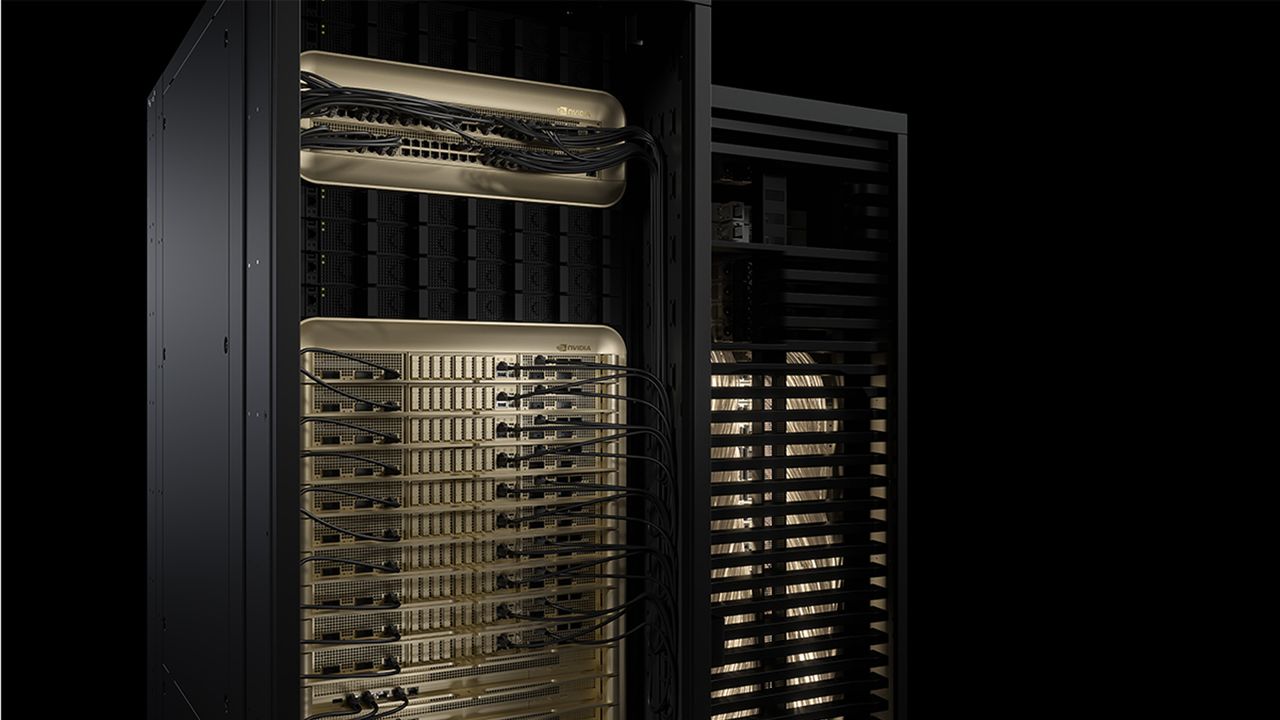
The cluster, worth around $2.5 billion and consisting of 500 NVL72 GB200 rack-scale systems, will be formally owned and operated by Aolani Cloud in Malaysia. The hardware will be supplied through Aivres, a company that builds servers based on Nvidia GPUs, according to the WSJ, which cites people familiar with the arrangements. An Aolani spokesperson told WSJ that the company currently operates with roughly $100 million worth of hardware, so the scale of the proposed expansion is vast, but it is not completely clear who is funding it. ByteDance is also reportedly considering additional deployments, such as a cluster containing over 7,000 B200 GPUs at a data center in Indonesia.
Aolani has been leasing AI servers equipped with Nvidia H100 GPUs in Malaysia to ByteDance since February, 2025, so it is highly likely that the company’s primary focus is to lease AI hardware to the Chinese company. That said, the Hopper-based cluster is likely a test vehicle to ensure that ByteDance can technically use it, and the U.S. regulators do not oppose such usage by granting all the required export licenses. For the planned Blackwell deployment, initial payments have reportedly already been made.
Article continues belowAolani was established in late 2023 and operates under a Cayman Islands holding structure, according to company registry documents cited by the WSJ. The company is designated as a Tier-1 cloud partner of Nvidia, which means that it has certification from the developer of AI GPUs and priority access to its newest accelerators, but this does not mean that Nvidia has all the required export licenses from the U.S. government to ship to Aolani. For advanced AI GPUs (H100/B200/B300, etc.), Nvidia must ensure that every shipment complies with U.S. Department of Commerce Bureau of Industry and Security rules.
Exports of Nvidia AI accelerators to Malaysia typically do not require a BIS export license, but compliance checks are still mandatory, and licenses may be required in certain cases. To that end, Nvidia’s compliance teams review cloud partners before shipping hardware to them.
“All Nvidia cloud partners are evaluated and cleared by Nvidia’s field operations, finance, and compliance teams before they can receive our products, directly or through an OEM,” an Nvidia spokesperson told Tom’s Hardware.
While ByteDance is a China-based company, it is not in the Bureau’s Entity List or Military End Use (MEU) list, so its potential use of Nvidia hardware does not automatically trigger a red flag for Nvidia, Aolani, or the U.S. government. Furthermore, the 2023 U.S. export controls primarily regulate where the hardware is shipped, not where its compute oomph is used, which means that the rules were intentionally written to allow global cloud infrastructure based on American hardware. While many U.S. lawmakers are uneasy about usage of American AI accelerators by Chinese companies in the cloud, this is completely legal under the current export rules framework.
Get Tom's Hardware's best news and in-depth reviews, straight to your inbox.
“By design, the export rules allow clouds to be built and operated outside controlled countries,” the Nvidia spokesperson stressed. “Winning the business of those clouds will bring tens of billions of dollars and high paying jobs home. Export controls gave the world’s second largest commercial market to foreign competitors, and America cannot afford to make the same mistake across all of Asia.”
Follow Tom's Hardware on Google News, or add us as a preferred source, to get our latest news, analysis, & reviews in your feeds.
Anton Shilov is a contributing writer at Tom’s Hardware. Over the past couple of decades, he has covered everything from CPUs and GPUs to supercomputers and from modern process technologies and latest fab tools to high-tech industry trends.
 Meridiano