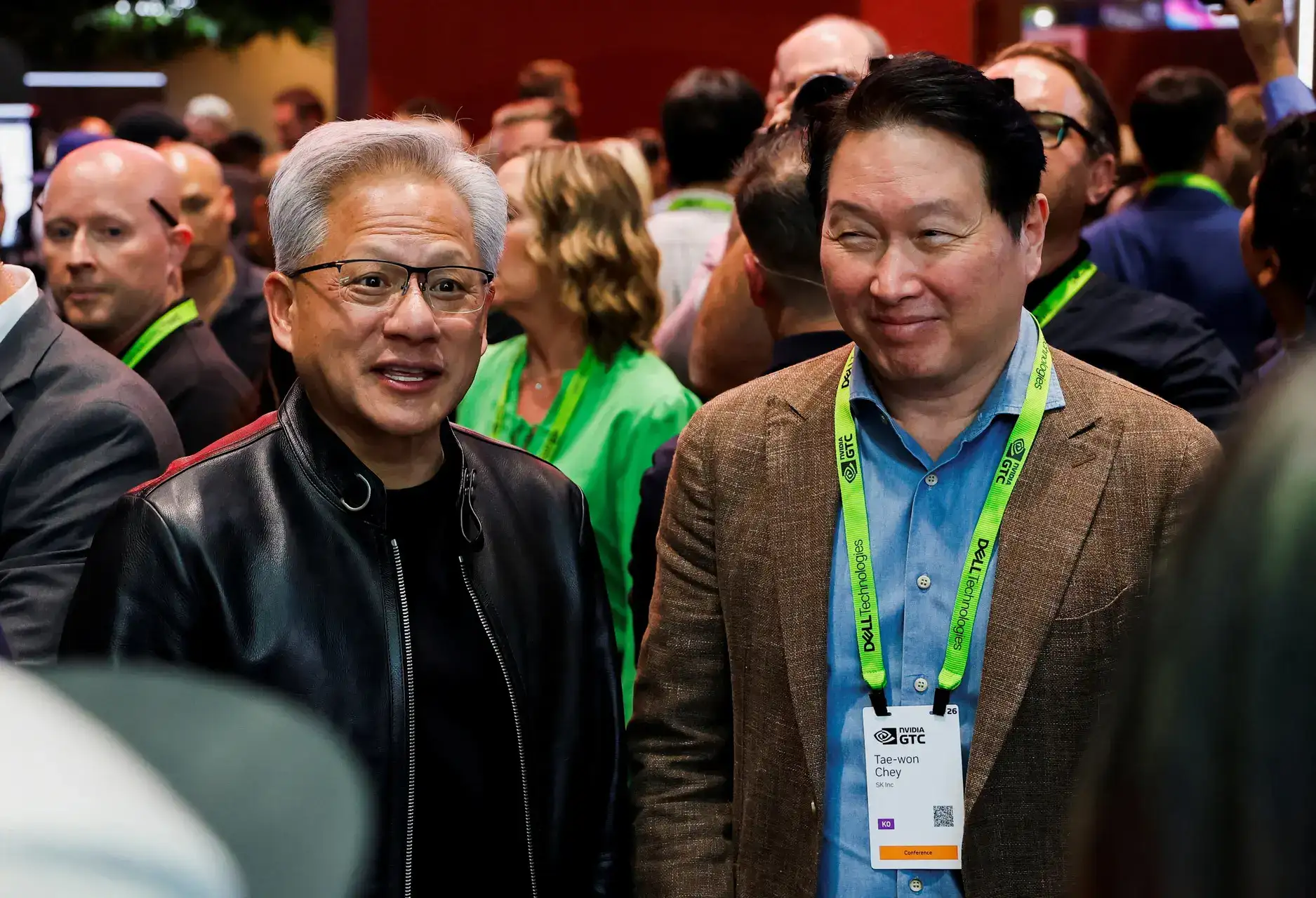
South Korea's SK Group Chairman Chey Tae-won saidon Monday the global chip wafer shortage is likely to persist until 2030, as âdemand driven by â artificial intelligence â continues to outpace supply.
Speaking to reporters on the sidelines of Nvidia's GTC Conference in San Jose, California, Chey said that SK Hynix is reviewing a potential U.S. ADR listing to broaden its global investor base, while its CEO may unveil plans to stabilise DRAM chip prices and the group explores alternative energy sources.
SK Hynix, the main high-bandwidth memory (HBM) supplier to Nvidia, ranks No.1 in the HBM market with a 57% share âand holds a 32% share of the global DRAM market, making â it the second-largest âplayer, according to Counterpoint.
"AI actually wants to have a lot of âHBM, and once âyou make the HBM...we have to use a lot of wafers," said â Chey, explaining the shortage of wafers.
"So we need some time to âbuild up more wafers, at least four to five years. The current âshortage could continue until 2030, so we expect more than a 20% shortage of the wafers," Chey said.
He said that SK Hynix would try to come up with a strategy to stabilise DRAM prices.
"So I cannot just announce right here, but I guess that our CEO is going to announce a new plan for how to stabilise the price of the DRAM," Chey âsaid.
When asked about expanding chip manufacturing capacity in the United States, where many of SK Hynix's customers are based, Chey said establishing overseas plants required adequate âpower, water, construction conditions âand engineering talent. Accordingly, he â said this could not be done easily on demand, adding that the company was currently focusing on production in Korea.
On a potential U.S. ADR listing, Chey said the move could help expand SK Hynix's âshareholder base beyond Korea, increasing exposure to American and international investors and strengthening its global presence.
Chey also said tensions in the Middle East had created a lot of difficulties due to higher energy prices, pushing the group to seek other available energy sources.
Shares of SK Hynix were trading up 2.7% on Tuesday morning in Seoul, versus the benchmark KOSPI's 2.4% rise.
Speaking to reporters on the sidelines of Nvidia's GTC Conference in San Jose, California, Chey said that SK Hynix is reviewing a potential U.S. ADR listing to broaden its global investor base, while its CEO may unveil plans to stabilise DRAM chip prices and the group explores alternative energy sources.
SK Hynix, the main high-bandwidth memory (HBM) supplier to Nvidia, ranks No.1 in the HBM market with a 57% share âand holds a 32% share of the global DRAM market, making â it the second-largest âplayer, according to Counterpoint.
"AI actually wants to have a lot of âHBM, and once âyou make the HBM...we have to use a lot of wafers," said â Chey, explaining the shortage of wafers.
"So we need some time to âbuild up more wafers, at least four to five years. The current âshortage could continue until 2030, so we expect more than a 20% shortage of the wafers," Chey said.
He said that SK Hynix would try to come up with a strategy to stabilise DRAM prices.
"So I cannot just announce right here, but I guess that our CEO is going to announce a new plan for how to stabilise the price of the DRAM," Chey âsaid.
When asked about expanding chip manufacturing capacity in the United States, where many of SK Hynix's customers are based, Chey said establishing overseas plants required adequate âpower, water, construction conditions âand engineering talent. Accordingly, he â said this could not be done easily on demand, adding that the company was currently focusing on production in Korea.
On a potential U.S. ADR listing, Chey said the move could help expand SK Hynix's âshareholder base beyond Korea, increasing exposure to American and international investors and strengthening its global presence.
Chey also said tensions in the Middle East had created a lot of difficulties due to higher energy prices, pushing the group to seek other available energy sources.
Shares of SK Hynix were trading up 2.7% on Tuesday morning in Seoul, versus the benchmark KOSPI's 2.4% rise.
 Meridiano