Microsoft CEO Satya Nadella acknowledges AI will disrupt work by streamlining processes and handling routine tasks, but he rejects alarmist predictions of mass job displacement. He emphasizes the need for reskilling, particularly in fields like software development, and views AI as a tool to augment human capabilities rather than an independent intelligence.
Nadella expressed these views during the OMR podcast and Microsoft's global AI Tour, which offers hands-on sessions with tools like Copilot for executives and developers. He maintains an optimistic view that human societies can adapt to these changes, though he acknowledges the real challenge is proving AI's practical value in the real world.
The main topics covered are: the impact of AI on work and jobs, the need for workforce adaptation and reskilling, Microsoft's AI Tour and tools, and a philosophical perspective on AI as a human-augmenting tool.
Microsoft CEO Satya Nadella said artificial intelligence (AI) will alter how people work, but he rejects alarmist predictions about mass displacement.
He acknowledged that both the âwork artifactâ and the workflow will change as AI tools become embedded in daily tasks, adding that processes will be streamlined and routine work handled by machines.
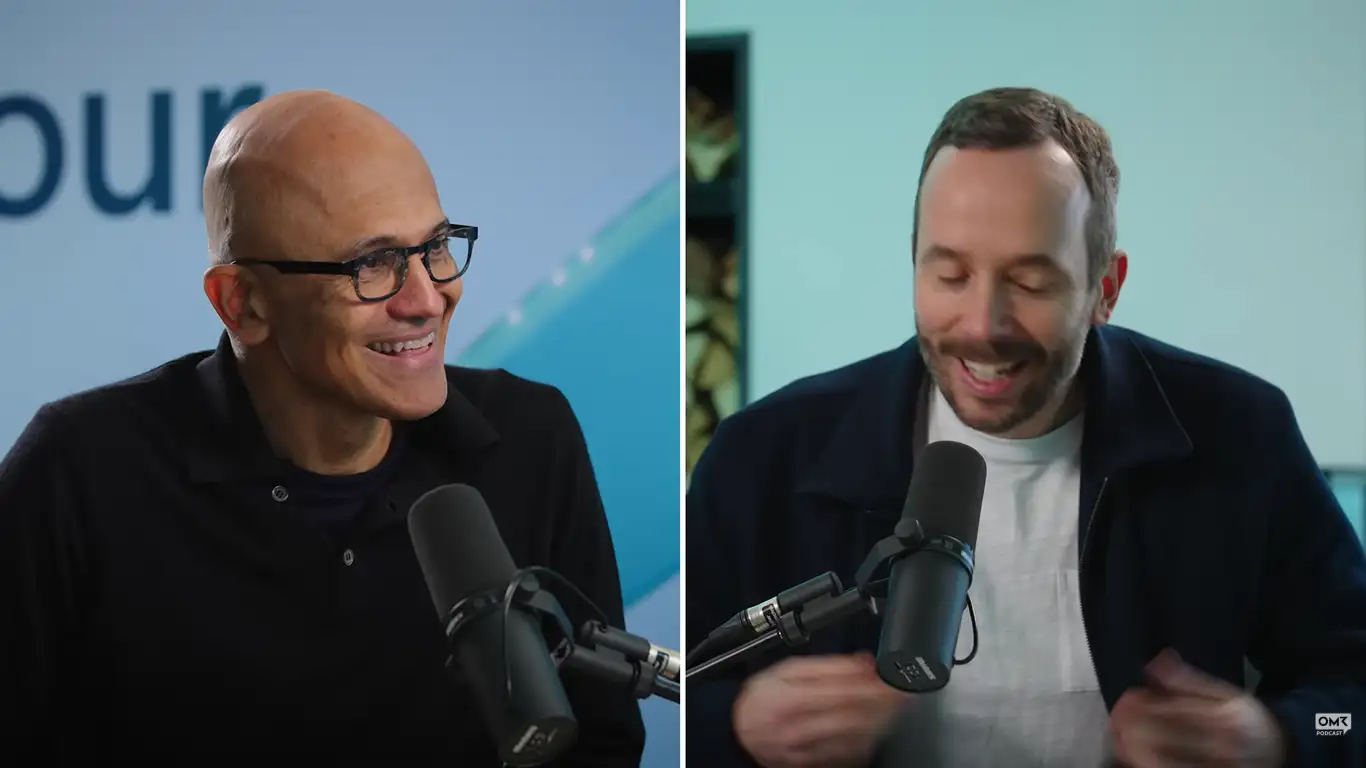
He was speaking at the OMR podcast a few days back while also sharing his experience about the Munich tour held on February 26, right after the London AI tour.
Microsoftâs AI Tour is designed for executives setting AI strategy and developers tasked with delivering it. Attendees could test Microsoftâs AI tools, including Foundry and Copilot, in hands-on sessions led by company engineers and external experts.
Microsoftâs AI Tour has also been successfully conducted in China, Japan, Finland, Spain, Italy, and Norway, among others.
AI job disruption
Pointing to software development as the leading edge of AIâs impact, he said employees need to reskill, learn to work with the new medium and tools, and adapt to the shift underway.
Understanding AI, he suggested, will be essential to staying relevant as workflows evolve.
âI am not being pollyannic about this,â he said. âBut I am saying letâs at least have a bit of optimism in our ability as humans and human societies and as political economies.â
The disruption is real, Nadella said, but so is the capacity to adapt.
In a blog published towards the end of last year, Satya Nadella argued that the AI industry has moved past its novelty phase and now faces a more difficult challenge: proving that any of this actually works in the real world.
Nadella said AI should not be seen as an independent intelligence but as a tool that boosts human thinking and helps people achieve their goals.
He acknowledged that both the âwork artifactâ and the workflow will change as AI tools become embedded in daily tasks, adding that processes will be streamlined and routine work handled by machines.
He was speaking at the OMR podcast a few days back while also sharing his experience about the Munich tour held on February 26, right after the London AI tour.
Microsoftâs AI Tour is designed for executives setting AI strategy and developers tasked with delivering it. Attendees could test Microsoftâs AI tools, including Foundry and Copilot, in hands-on sessions led by company engineers and external experts.
Microsoftâs AI Tour has also been successfully conducted in China, Japan, Finland, Spain, Italy, and Norway, among others.
AI job disruption
Pointing to software development as the leading edge of AIâs impact, he said employees need to reskill, learn to work with the new medium and tools, and adapt to the shift underway.
Understanding AI, he suggested, will be essential to staying relevant as workflows evolve.
âI am not being pollyannic about this,â he said. âBut I am saying letâs at least have a bit of optimism in our ability as humans and human societies and as political economies.â
The disruption is real, Nadella said, but so is the capacity to adapt.
In a blog published towards the end of last year, Satya Nadella argued that the AI industry has moved past its novelty phase and now faces a more difficult challenge: proving that any of this actually works in the real world.
Nadella said AI should not be seen as an independent intelligence but as a tool that boosts human thinking and helps people achieve their goals.
 Meridiano