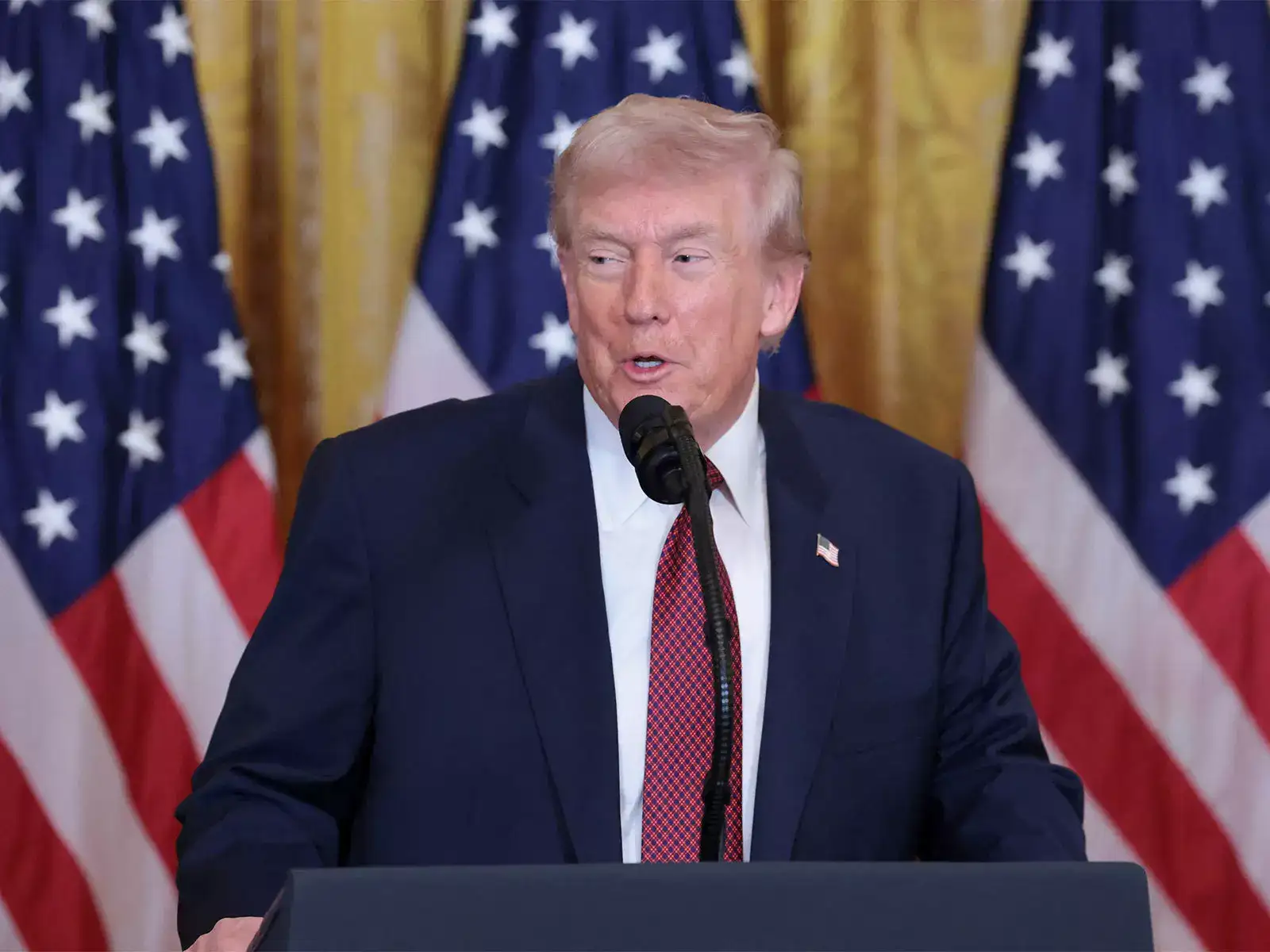
President Trump is meeting with major tech companies to formalize a "Ratepayer Protection Pledge," aiming to prevent rising household electricity costs driven by energy-intensive AI data centers. The expected commitments include tech firms securing their own power supplies, funding grid upgrades, and entering special rate agreements to avoid straining public utilities.
A critic notes that the policy's focus on fossil fuel generation may not alleviate grid pressure quickly, as these plants take longer to build than renewable alternatives. The initiative is also viewed as politically timed ahead of midterm elections, with observers watching to see if it yields concrete action or remains symbolic.
The main topics covered are the White House tech meeting, the "Ratepayer Protection Pledge" details, political and economic motivations, and criticisms regarding implementation speed and energy source focus.
US President Donald Trump is set to meet on Wednesday with leaders of major technology companies, including Google, Meta and OpenAI, to formalize a pledge aimed at protecting consumers from rising electricity costs tied to the rapid expansion of energyâintensive data centers.
The White House has said the soâcalled "Ratepayer Protection Pledge," announced by Trump in his State of the Union Address, would see tech firms commit âto measures designed â to â ensure the boom in artificial intelligence infrastructure does not translate into higher utility bills for households and small businesses.
The initiative âis being launched ahead of the November midterm elections, with voters increasingly concerned about energy affordability and the âincreased strain on the country's power grids from data centers.
The pledges are expected to include a commitment by technology companies to bring or buy electricity supplies for their data centers, either from ânew power plants or existing plants with expanded output capacity, according â to two âsources familiar with the plans.
They are also likely to include commitments from âBig Tech to âpay for upgrades to power delivery systems and to enter into special â electricity rate agreements with utilities, the sources said.
Companies expected at âthe White House include some of the biggest names in the tech âsector, which are investing billions in new AI computing capacity that draws vast amounts of electricity.
Trump has urged those firms to build or secure dedicated power capacity to meet demand rather than relying solely on regional grids, part of a broader effort to balance technological competitiveness with political and economic concerns about energy costs.
It's not clear, however, that the effort will get new âsupplies of electricity built quickly enough to ease pressure on grids, said Jon Gordon, who is a director at Advanced Energy United, a clean energy trade âgroup that âincludes some data centers.
That's in â part due to Trump's policy focus on increasing natural gas and other fossil fuel-fired power for data centers, instead of quicker-build sources like solar and wind, he added.
"The real problem is the âinability to get generation online fast enough to meet the data center demand," Gordon said. "Hyperscalers paying for the generation doesn't get it online any faster."
Advocates and critics alike will be watching closely to see whether the pledge produces concrete commitments or remains largely symbolic, as lawmakers and consumer groups have called for stronger protections to prevent utility bill increases tied to data center buildâouts.
The White House has said the soâcalled "Ratepayer Protection Pledge," announced by Trump in his State of the Union Address, would see tech firms commit âto measures designed â to â ensure the boom in artificial intelligence infrastructure does not translate into higher utility bills for households and small businesses.
The initiative âis being launched ahead of the November midterm elections, with voters increasingly concerned about energy affordability and the âincreased strain on the country's power grids from data centers.
The pledges are expected to include a commitment by technology companies to bring or buy electricity supplies for their data centers, either from ânew power plants or existing plants with expanded output capacity, according â to two âsources familiar with the plans.
They are also likely to include commitments from âBig Tech to âpay for upgrades to power delivery systems and to enter into special â electricity rate agreements with utilities, the sources said.
Companies expected at âthe White House include some of the biggest names in the tech âsector, which are investing billions in new AI computing capacity that draws vast amounts of electricity.
Trump has urged those firms to build or secure dedicated power capacity to meet demand rather than relying solely on regional grids, part of a broader effort to balance technological competitiveness with political and economic concerns about energy costs.
It's not clear, however, that the effort will get new âsupplies of electricity built quickly enough to ease pressure on grids, said Jon Gordon, who is a director at Advanced Energy United, a clean energy trade âgroup that âincludes some data centers.
That's in â part due to Trump's policy focus on increasing natural gas and other fossil fuel-fired power for data centers, instead of quicker-build sources like solar and wind, he added.
"The real problem is the âinability to get generation online fast enough to meet the data center demand," Gordon said. "Hyperscalers paying for the generation doesn't get it online any faster."
Advocates and critics alike will be watching closely to see whether the pledge produces concrete commitments or remains largely symbolic, as lawmakers and consumer groups have called for stronger protections to prevent utility bill increases tied to data center buildâouts.
 Meridiano